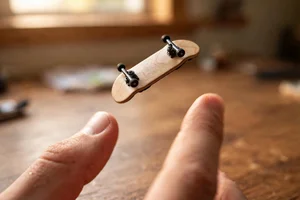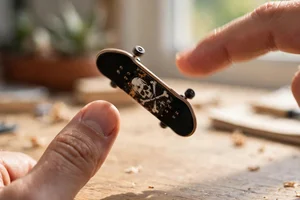
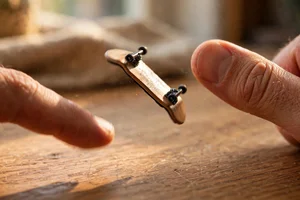
Learning how to half cab on a Tech Deck is the best way to add your first fakie trick after the frontside 180. This guide shows you the finger placement, the fakie roll, the spin, the catch, and a 10 minute drill. You will also fix the three mistakes that stop most beginners and see what to learn next.
Your frontside 180 is landing, and now you want a trick that starts backwards. Learning how to half cab on a Tech Deck is the natural next step. You roll the board backwards, pop, spin it halfway around, and land rolling forwards. It looks smooth, it feels strange at first, and it opens the door to fakie tricks and 360 spins.
The hard part is the fakie roll. You are moving tail first, and your fingers sit the opposite way round from a normal ollie. That switch takes a few days to feel normal. The good news is that you can learn it on a desk in a small space. You do not need a ramp, a rail, or a skatepark. In this guide you will learn the finger placement, the five steps, the three mistakes to avoid, and a 10 minute daily drill.
What Is a Half Cab on a Tech Deck?
A half cab is a fakie 180. You roll the board backwards, pop it off the table, spin it halfway around, and land rolling forwards. Your hand turns with the board through the spin, and you catch it on all four wheels.
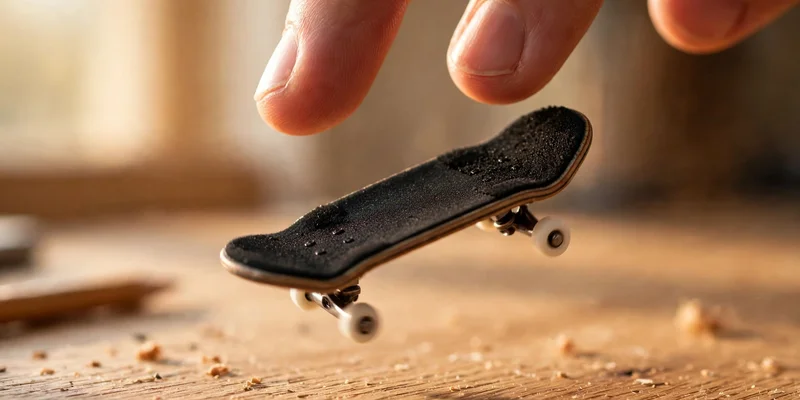
The name comes from real skateboarding. The full caballerial is a fakie 360, named after Steve Caballero. A half cab is half of that, a 180 degree turn instead of a full 360. On a Tech Deck your fingers play the role of your feet, and your hand spins with the board as it turns.
A half cab is one of the first fakie tricks most riders learn after the frontside 180. It looks harder than it is, because rolling backwards feels strange at first. Most beginners who can already frontside 180 land a half cab within one to two weeks.
What Is the Difference Between a Half Cab and a Frontside 180?
The difference is the direction you start rolling. In a frontside 180 you roll forwards and spin the board around. In a half cab you roll backwards, tail first, and spin the board around to land rolling forwards.
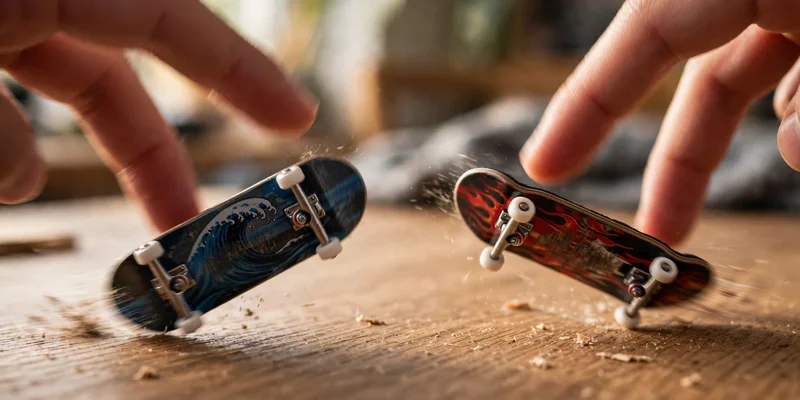
That switch changes the feel of the whole trick. Your fingers sit the opposite way round, your hand turns the other way, and the landing faces the other direction. At first your fingers will want to set up for a normal frontside 180, because that is what they know. You have to slow down and think about the fakie roll on purpose.
Here is a simple way to think about it. A frontside 180 starts facing one way and ends facing the other. A half cab starts facing the other way and ends facing the first way. Both use the same spin, so once you learn one, the other is just a new starting direction to practise.
If you have not learned the frontside 180 yet, start with our guide on How to Frontside 180 on a Tech Deck, then come back here. If you are still choosing a board, read our guide to the best Tech Deck to buy in 2026 first.
What Do You Need Before You Learn a Half Cab?
You should be able to frontside 180 cleanly before you learn a half cab. You do not need a perfect 180, but you need to pop, spin, and catch without thinking about it, because the half cab adds a backwards roll on top of the same spin.
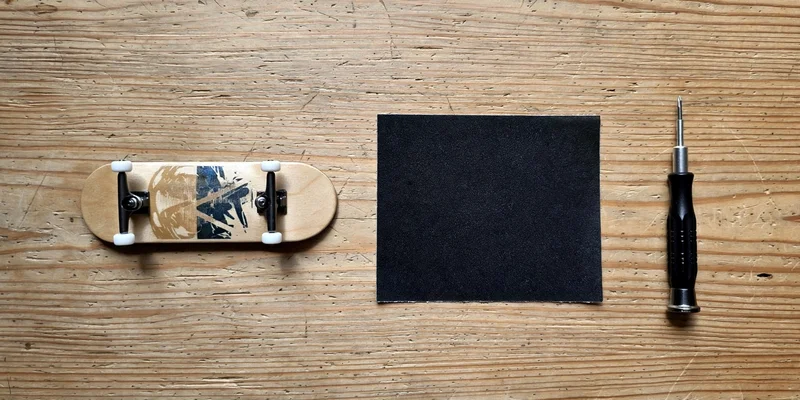
- A flat, hard surface. A desk or table is ideal. The board needs to pop and spin freely without catching on carpet or cloth.
- A Tech Deck with free-spinning wheels. If a wheel drags, the board will not roll straight backwards, and the spin will pull to one side.
- Grip tape with some grip left. Your fingers need to grip the board to turn it. Worn, smooth grip makes the spin slip.
- A little space. The board rolls backwards first, then spins in place, so you need clear space behind you as well as in front of you.
One more thing helps a lot. Practise the fakie roll on its own first. Roll the board backwards for a few minutes until it feels normal. If the backwards roll feels scary, the spin will feel scary too, so get comfortable rolling fakie before you add the pop.
Where Do Your Fingers Go for a Half Cab?
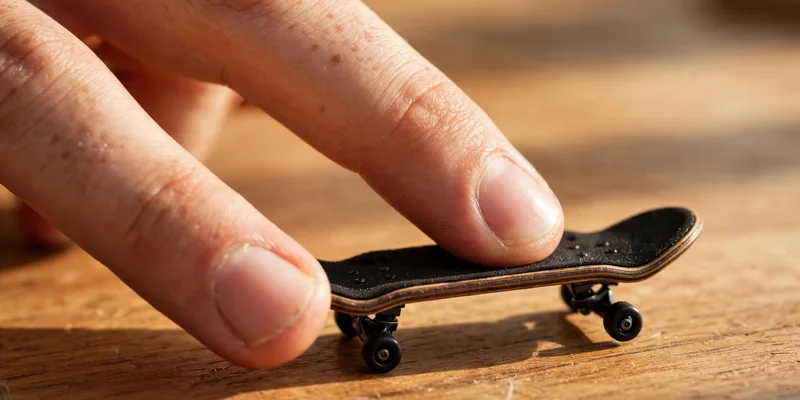
Finger placement for a half cab is the mirror image of a frontside 180. Your fingers swap ends, because the board is moving backwards. Your middle finger moves to the nose, and your index finger moves to the tail.
Step 1: Put Your Middle Finger on the Nose
Place your middle finger on the nose, toward the back edge and slightly to one side. Your fingertip should sit near the corner of the nose, not in the centre. This finger pops the board and starts the spin, so it needs a spot where it can push and twist.
Step 2: Put Your Index Finger Near the Tail
Place your index finger near the tail, just behind the back bolts. This finger stays light. Its job is to guide the board and catch it after the spin, not to push it. If it presses too hard, it will stop the spin.
Step 3: Wind Up Your Hand Slightly
Turn your hand a little in the opposite direction before you pop, like winding up a spring. A small wind up is enough. Your hand should turn back about 30 degrees, no more. This stores the spin, so the board turns easily when you release it.
Quick test: wind up and pop lightly without landing. If the board starts to turn toward your front, your placement is right.
How Do You Half Cab on a Tech Deck Step by Step?
Here is a simple 5 step process to land your first half cab. Each step builds on the last one, so practise them in order. Take your time with the fakie roll, because rushing it makes the spin wobble.
Step 1: Roll Backwards Slowly
Start with the board rolling backwards at a slow, steady speed. Learn it rolling fakie, not standing still, because the backward motion keeps the board stable. Push the board gently with your fingers and let it roll in a straight line.
Step 2: Pop the Nose
Pop the nose with your middle finger, the same way you would pop the tail in a normal ollie. Push down sharply and let the board rise. The pop gives the board the height it needs to spin, so make it clean and strong.
Tip: the pop and the spin happen together, not one after the other. Pop the nose and unwind your hand in the same moment, like one movement.
Step 3: Turn Your Hand and the Board
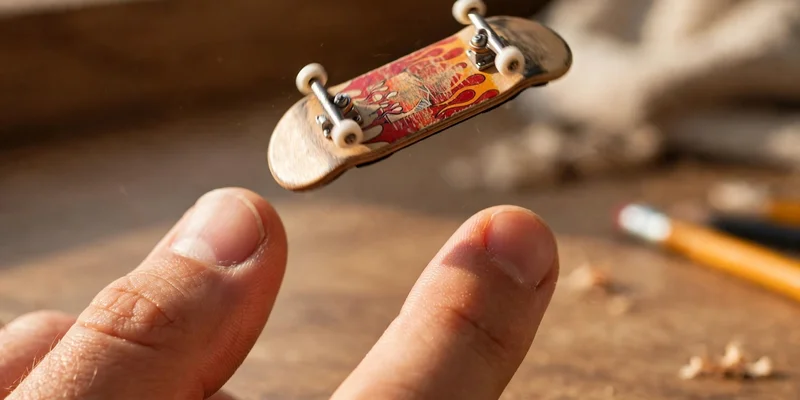
As the board rises, unwind your hand toward your front and let the board turn with it. Your middle finger twists the nose, and your index finger guides the tail around. The board should turn smoothly, not in a jerk.
Step 4: Watch for the 180 Degree Turn
Watch the board spin until it has turned halfway around, 180 degrees, and the nose and tail have swapped places. Do not try to catch it early. Let it complete the turn, and keep your eyes on the board the whole time.
Step 5: Catch and Land Rolling Forwards
As the board completes the spin, bring both fingers down over the bolts and catch it. Land on all four wheels at the same time, then keep rolling forwards in the new direction. To make it smoother, catch it a fraction earlier each time, until the landing feels soft.
What Are the Most Common Half Cab Mistakes?
Most half cab problems come from three mistakes. Fix them one at a time, and the trick gets much easier.
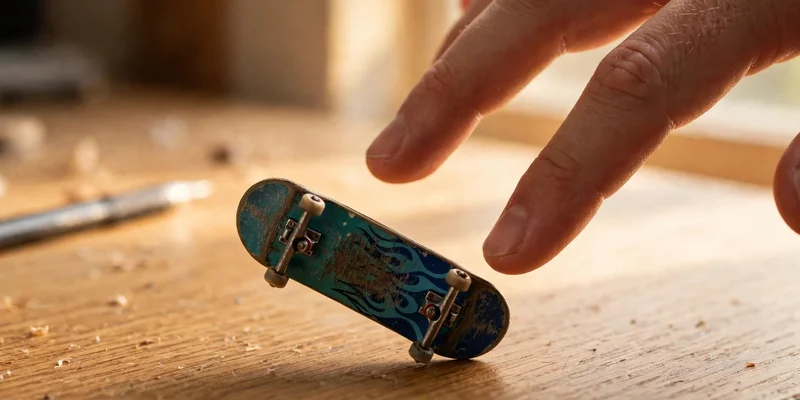
- Not rolling fakie first. The board is still when you pop, so the spin has no direction and the landing feels blind. Fix it by rolling backwards slowly before every try, even if the roll is only a few centimetres long.
- Popping without spinning. The board jumps straight up and lands facing the same way. Fix it by popping and unwinding in the same moment. If you pop first and spin second, the board is already falling before it turns.
- Catching too early. You grab the board halfway through the spin and it lands sideways. Fix it by waiting for the full turn. Watch the graphic on the board. When the nose and tail have swapped places, the board is ready to catch.
One more mistake is common. Riders spin the board with their fingers only, and the turn is weak. Use your whole hand and your wrist, not just your fingertips. The spin comes from the hand, and the fingers only guide it.
If your board keeps landing on two wheels, your catch is uneven. Bring both fingers down at the same time, over the bolts, and the landing will level out.
How Can You Practise the Half Cab in 10 Minutes a Day?
A short daily drill works better than a long session once a week. Your hand learns the spin by repeating it, and ten minutes a day is enough to build it in a few weeks.
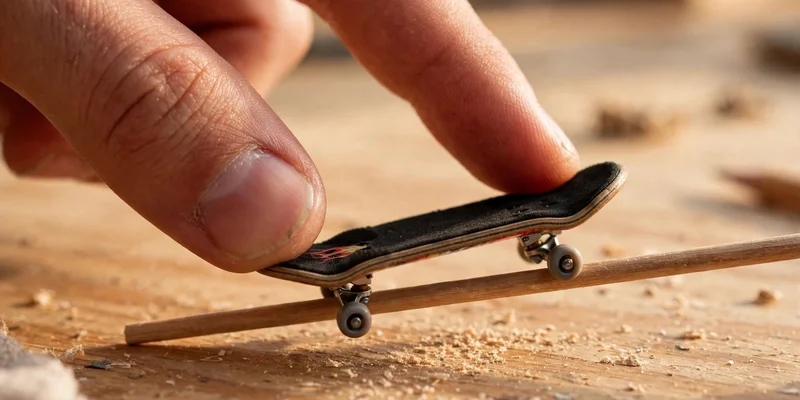
First, spend two minutes on the fakie roll alone. Roll the board backwards and forwards without popping. This teaches your fingers the reversed placement and keeps the roll straight.
Second, spend five minutes on slow spins. Pop gently and turn the board slowly, without worrying about the landing. Just watch the spin and learn the timing. Slow spins teach your hand more than fast ones.
Third, spend three minutes on full tries. Roll fakie, pop, spin, and catch. Count how many you land out of ten, and write the number down. Most riders land one in ten in the first week, and three in ten by the third week.
Practise at the same time each day if you can. Your hand remembers the motion better with a regular routine. And take a break if your wrist gets tired. A tired wrist makes sloppy spins, and sloppy spins teach bad habits.
What Are the Advantages and Disadvantages of the Half Cab?
A half cab is a great next trick after the frontside 180, but it is not perfect for everyone. Here is an honest look at both sides before you start. Knowing both sides helps you practise with the right expectations.
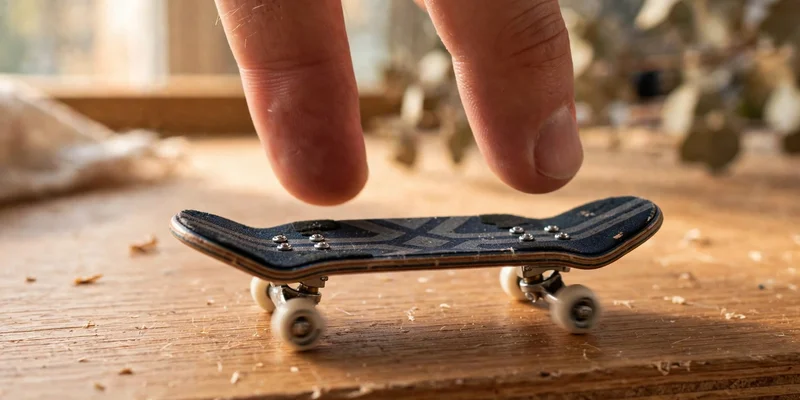
Advantages
- It adds a fakie trick to your set. Rolling backwards is a new skill, and the half cab teaches it in the simplest way, with a spin you already know.
- It unlocks the full cab and 360 spins. The fakie roll and timing you build here show up again in full cabs and fakie 360s, so the work pays off fast.
- It makes your lines look smoother. Landing a trick and rolling away in the opposite direction looks clean, and it links well with manuals and grinds.
Disadvantages
- The fakie roll feels strange at first. Rolling tail first is the opposite of what you are used to, so the first week feels clumsy until the new direction settles in.
- The landing is harder to judge. You land facing the other way, so the catch feels blind for a while, and that makes early tries land sideways.
- It needs a clean frontside 180 first. If your 180 is shaky, the half cab will be shaky too, so you have to fix the spin before this trick works.
What Should You Learn After the Half Cab?
A clean half cab opens up a whole set of fakie tricks. The backwards roll and the timing you build here show up again in full cabs, fakie flips, and 360 spins, all of which use the same start.
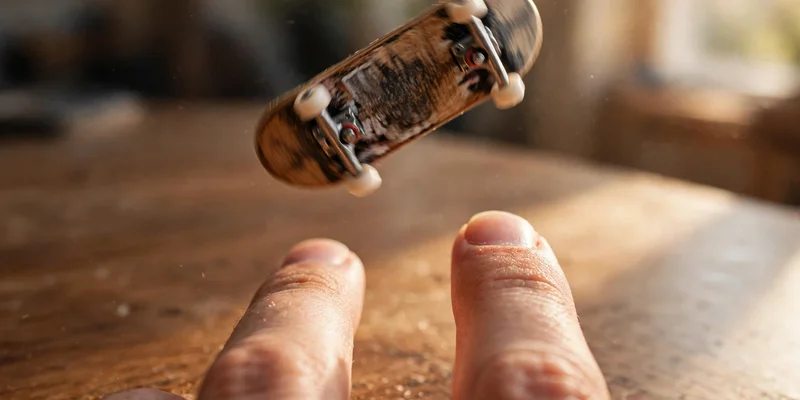
- Full cab. The same trick with a full 360 spin instead of 180. It needs a bigger wind up and a stronger pop, so learn the half cab first.
- Fakie kickflip. A flip trick that starts from a fakie roll. Your hand already knows the backwards roll, and the flip is the only new part. Read our guide on How to Kickflip on a Tech Deck to build the flick.
- Shuvit. The scoop trick that pairs well with a half cab, because the landing often flows straight into a spin. Read our guide on How to Shuvit on a Tech Deck when you are ready.
The best next step is to link the half cab with a trick you already know. Roll into a manual, then half cab out of it, or half cab and land straight into a manual. That combo looks smooth, it shows real control, and it is a favourite in fingerboard videos.
For the full list of tricks in order, see our pillar guide to Tech Deck tricks.
What Do Beginners Ask About the Half Cab?
Here are the questions beginners ask most about the half cab. Each answer is short and direct, so you can find your fix fast.
How long does it take to learn how to half cab on a Tech Deck?
Most beginners who can already frontside 180 land their first half cab within one to two weeks. A clean half cab, with a full spin and a flat four wheel landing, usually takes three to four weeks of ten minute daily practice.
Is a half cab harder than a frontside 180?
For most people, yes at first. The spin is the same, but the half cab adds a backwards roll and a landing that faces the other way. Riders who can frontside 180 usually land a half cab within two weeks of practice.
Why does my board keep spinning past 180 degrees?
Your wind up is too big, or your hand keeps turning after the board should stop. Wind your hand up less before the pop, and stop turning your wrist once the board has turned halfway. A smaller wind up gives a cleaner 180.
Should I learn a half cab rolling or standing still?
Learn it rolling fakie slowly. A rolling board is more stable than a still board, and the backward motion helps you feel the spin and the landing. Start with a slow fakie roll, pop, spin, and land rolling forwards, then try it a little faster once the landing feels clean.
What is the difference between a half cab and a fakie ollie?
A fakie ollie is a straight jump from a backwards roll, with no spin. A half cab adds a 180 degree spin to that same jump, so the board turns around and you land rolling forwards. Learn the fakie ollie first, then add the spin.
Why do I keep landing sideways?
You are catching the board too early, before the spin is done, or your fingers are coming down unevenly. Wait for the full turn, watch the nose and tail swap places, then bring both fingers down at the same time over the bolts.
Do I need to ollie first to learn how to half cab on a Tech Deck?
Yes, you should be able to ollie and frontside 180 cleanly first. The half cab is a fakie 180, so the pop and the spin have to be automatic before you add the backwards roll. If you cannot frontside 180 yet, spend a few days on it, then come back here.
Can I do a half cab on any Tech Deck?
Yes, any standard Tech Deck works. A board with free spinning wheels and decent grip tape is best. If a wheel drags or the grip is smooth, the fakie roll and the spin will be harder. Fix the setup first, then practise the trick.
Conclusion
So, in this article, we covered how to half cab on a tech deck in detail. You learned the finger placement, the fakie roll, the five steps, the three mistakes that stop most beginners, and a 10 minute drill that builds the trick day by day. You also saw what to learn next.
Here is my honest advice. Do not chase a fast spin in your first week. Spend ten minutes a day on slow, clean half cabs, and the speed will come on its own. Your hand is learning a new direction, so give it time and keep the practice slow and steady.
Now go practise your half cab for ten minutes and try to land three clean ones in a row. Once you can do that, try linking a manual into a half cab and rolling away forwards.
TechDeckTrick.com is an independent guide and is not affiliated with or endorsed by Tech Deck or Spin Master.