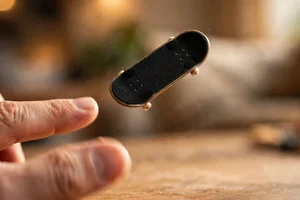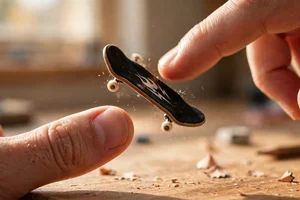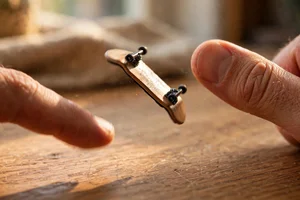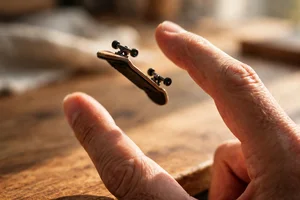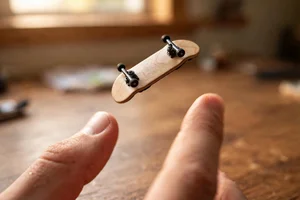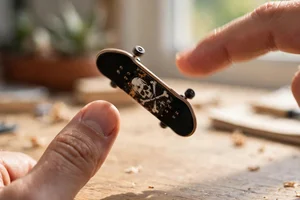
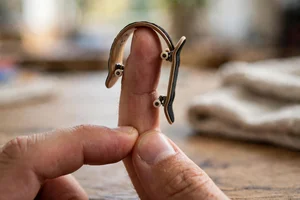
Learning how to impossible on a Tech Deck is the hardest flip trick most riders learn, because the board wraps a vertical turn around your back finger before you catch it. This guide shows you the finger placement, the scoop and wrap that start the rotation, the catch, and a 10 minute drill. You will also fix the three mistakes that stop riders and see what to learn next.
Your varial kickflip is landing, and now you want the trick that looks like it should not be possible at all. Learning how to impossible on a Tech Deck is the next step for riders who can already flip and spin the board with control. The board pops up, wraps around your back finger, and comes back down for the catch. It looks like magic, because the board rolls around your finger instead of flipping over it. The hard part is the wrap. Your back finger has to stay in the board’s path while the board turns around it, and your front finger has to get out of the way. That timing takes weeks to learn. You can learn it on a desk. You do not need a ramp, a rail, or a skatepark. In this guide you will learn the finger placement, the five steps, the three mistakes to avoid, and a 10 minute drill.
What Is an Impossible on a Tech Deck?
An impossible is a trick where the board wraps a full vertical turn around your back finger and comes back down to your fingers for the catch. You pop the tail, scoop it so the board starts to roll around your finger, and the board turns 360 degrees in the air before you land it.
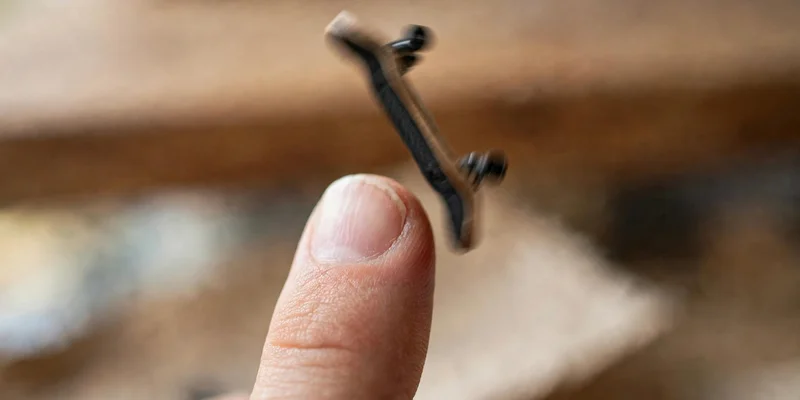
The name comes from real skateboarding. When Rodney Mullen invented the trick in the 1980s, people said it looked impossible, because the board seemed to wrap around his foot instead of flipping. On a Tech Deck your back finger plays the role of your foot, and the board wraps around it the same way.
An impossible is one of the hardest flip tricks most riders learn, and it is also one of the most impressive to watch. The board turns end over end in a tight circle, and the catch looks like the board just appears back under your fingers. Most riders who can already varial kickflip land an impossible within a few months.
What Is the Difference Between an Impossible and a 360 Flip?
The difference is the way the board turns. In a 360 flip the board flips over and spins flat, and in an impossible the board rolls in a vertical circle around your finger.
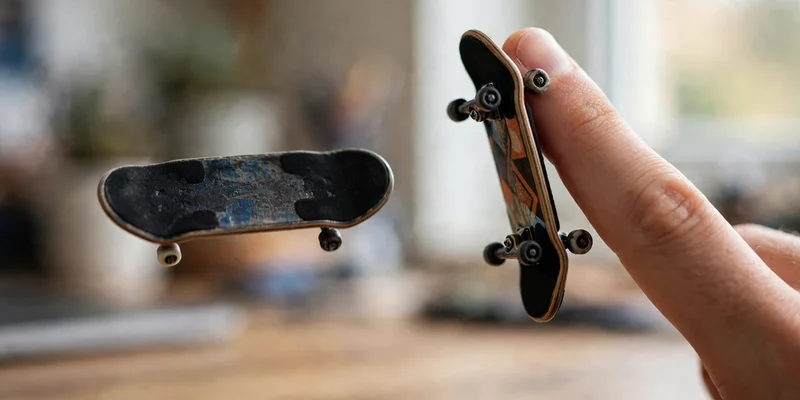
That change makes the whole trick feel different. In a 360 flip your fingers stay in front of the board and watch it flip and spin. In an impossible your back finger stays inside the board’s path, and the board rolls around it like a wheel around an axle.
Here is a simple way to think about it. A 360 flip is a flip plus a spin. An impossible is a wrap. Both use the same scoop, so once you learn one, the other is just a new direction for the board to turn.
If you have not learned the varial kickflip yet, start with our guide on How to Varial Kickflip on a Tech Deck, then learn the kickflip, and come back here when both feel solid.
What Do You Need Before You Learn an Impossible?
You should be able to kickflip, pop shuvit, and varial kickflip before you learn an impossible. You do not need a perfect 360 flip, but you need to know what a scoop and a flip feel like, and you need a catch you can trust.
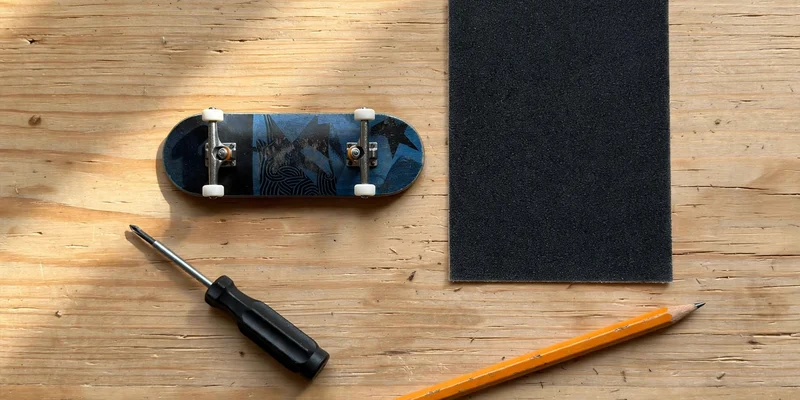
- A flat, hard surface. A desk or table is ideal. The board needs to pop and wrap freely without catching on carpet or cloth.
- A Tech Deck with free-spinning wheels. If a wheel drags, the board will not wrap cleanly and the landing will pull to one side.
- Grip tape with some grip left. Your back finger needs to grip the board to scoop it, and your front finger needs grip to guide it. Worn, smooth grip makes both jobs harder.
- A little space. The board wraps in place, so you do not need a long run-up. Clear the area around it, about 30 cm on each side.
One more thing helps a lot. Use the same board you learned the varial kickflip on. A familiar board means your fingers already know the weight and the pop, so you can focus on the new wrap instead of fighting a new setup. If you are still choosing a board, read our guide to the best Tech Deck to buy in 2026 first.
Where Do Your Fingers Go for an Impossible?
Finger placement for an impossible is close to varial kickflip placement, with one important change. Your back finger sits deep on the tail so the board can wrap around it, and your front finger stays near the middle to guide the board.
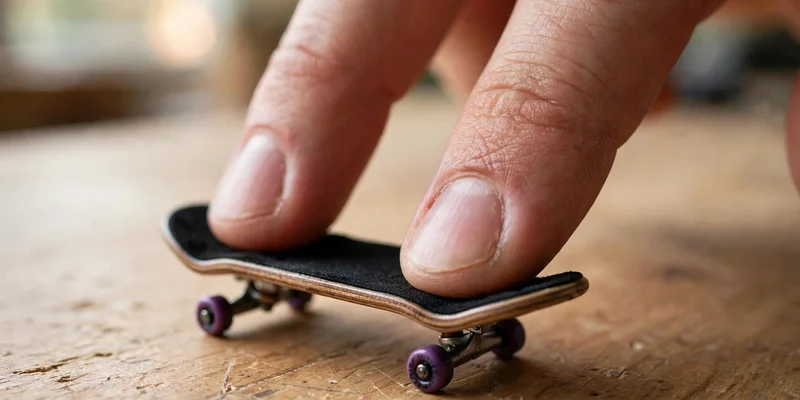
Step 1: Put Your Middle Finger Deep on the Tail
Place your middle finger deep on the tail, near the centre and toward the back edge. Your fingertip should sit flat on the grip tape with firm pressure. This finger pops the tail, scoops it, and stays in the board’s path so the board can wrap around it.
Step 2: Put Your Index Finger Near the Middle
Place your index finger near the middle of the board, just behind the front bolts. This finger stays light. Its job is to guide the board and catch it after the wrap, not to push it. If it presses too hard, it will stop the wrap.
Step 3: Keep Your Back Finger Ready to Wrap
Keep your back finger slightly bent and ready to stay still while the board turns around it. Your finger is the axle the board turns on, so it must not move away. Keep your hand low, close to the board, and keep your wrist loose.
Quick test: pop the tail lightly and scoop it without landing. If the board starts to roll around your finger instead of flipping away, your placement is right.
How Do You Impossible on a Tech Deck Step by Step?
Here is a simple 5 step process to land your first impossible. Each step builds on the last one, so practise them in order. Take your time with the wrap, because rushing it makes the board fly away.
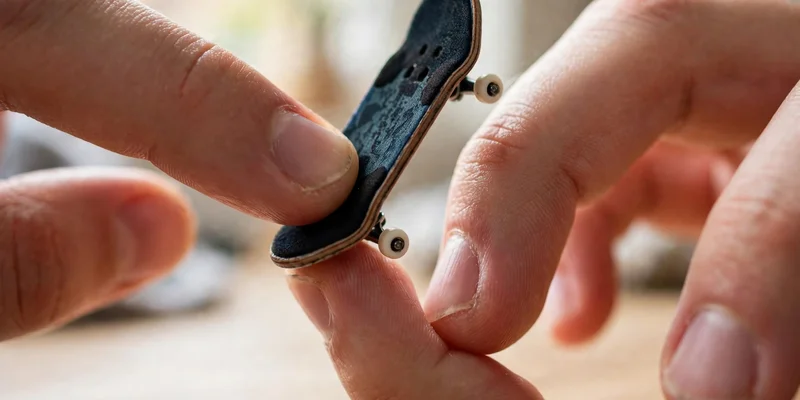
Step 1: Set Your Fingers and Stay Still
Set your fingers in the position above. Learn it from a standstill, not rolling, so you can watch the wrap without chasing the board. Keep the board flat and your fingers light.
Step 2: Pop and Scoop the Tail Hard
Pop the tail with your middle finger and scoop it toward your heel in the same motion. Push down sharply, then drag your finger in a circle, like stirring a small pot. The scoop starts the wrap, so make it clean and strong.
Tip: the pop and the scoop are one motion, not two. Pop down and drag in a circle together, and the board will start to roll around your finger.
Step 3: Let the Board Wrap Around Your Finger
As the board rises, keep your back finger still and let the board roll around it. Your finger stays in one place while the board turns a full circle around it. Do not pull your finger away. If you move it, the board has nothing to wrap around.
Step 4: Follow the Board With Your Hand
As the board wraps, lift your hand just a little and follow the board with your eyes. Watch it turn all the way around until the grip tape faces up again. Do not try to catch it early. Let it complete the full turn.
Step 5: Catch and Land on All Four Wheels
As the board comes back around, bring both fingers down over the bolts and catch it. Land on all four wheels at the same time, then roll forward a short distance. To make it smoother, catch it a fraction earlier each time, until the landing feels soft.
What Are the Most Common Impossible Mistakes?
Most impossible problems come from three mistakes. Fix them one at a time, and the trick gets much easier.
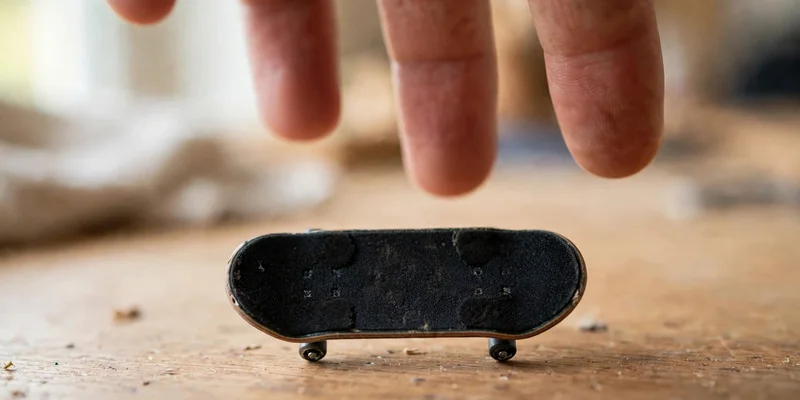
- Scooping too soft. The board flips like a kickflip instead of wrapping around your finger. Fix it by scooping harder and in a circle, not straight up. Drag your middle finger in a small circle and keep it in the board’s path.
- Moving your back finger away. The board starts to wrap, then flies off because your finger moved. Fix it by keeping your back finger still and low. Think of your finger as a pole, and let the board turn around it.
- Catching too early. You grab the board halfway through the wrap and it lands upside down. Fix it by waiting for the full turn. Watch the grip tape. When you can see it again, the board is ready to catch.
One more mistake is common. Riders press their front finger flat on the board, which stops the wrap. Keep your index finger near the middle and light. The wrap lives in the back finger, and the front finger only guides the board home.
If your board keeps landing on two wheels, your catch is uneven. Bring both fingers down at the same time, over the bolts, and the landing will level out.
How Can You Practise the Impossible in 10 Minutes a Day?
A short daily drill works better than a long session once a week. Your fingers learn the wrap by repeating it, and ten minutes a day is enough to build it in a few weeks.
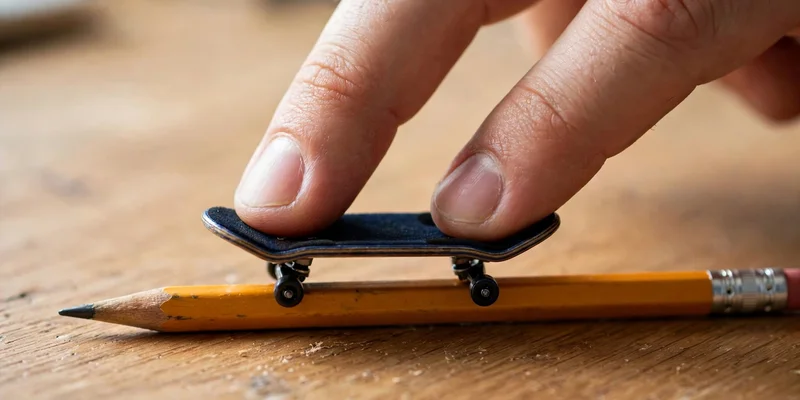
First, spend two minutes on the scoop alone. Pop and scoop the tail without flipping, and watch the board start to roll around your finger. This warms up your back finger and keeps the wrap clean.
Second, spend five minutes on slow wraps. Pop, scoop, and let the board turn slowly, without worrying about the landing. Just watch the board and learn the timing. Slow tries teach your fingers more than fast ones.
Third, spend three minutes on full tries. Pop, scoop, wrap, and catch. Count how many you land out of ten, and write the number down. Most riders land one in ten in the first month, and three in ten by the third month.
Practise at the same time each day if you can. Your fingers remember the motion better with a regular routine. And take a break if your hand gets tired. A tired hand makes sloppy scoops, and sloppy scoops teach bad habits.
What Are the Advantages and Disadvantages of the Impossible?
An impossible is one of the most impressive tricks you can learn, but it has a few downsides too. Here is an honest look at both sides before you start. Knowing both sides helps you practise with the right expectations.
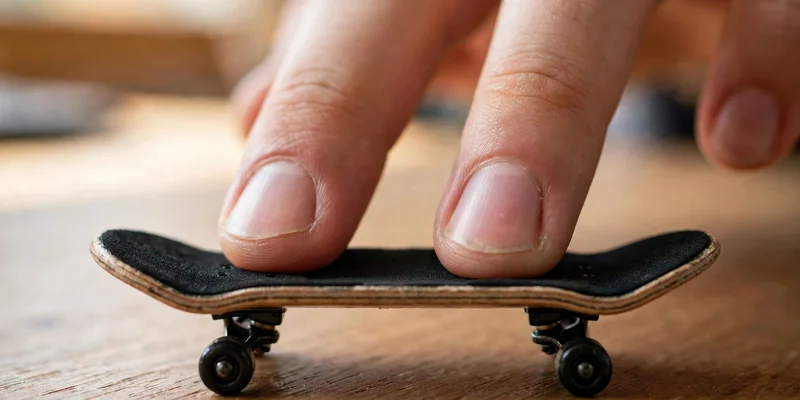
Advantages
- It is the most impressive flip trick to land. An impossible looks like the board breaks the rules, so landing one in front of other riders always gets a reaction.
- It teaches you the wrap. The scoop and wrap timing you build here shows up again in hardflips and other advanced tricks, so the work pays off fast.
- It makes your riding look complete. Landing a wrap proves you can control the board in every direction, and it makes your lines look smoother in fingerboard videos.
Disadvantages
- It takes months to learn. Most riders need two to three months of daily practice before the wrap and the catch land together cleanly.
- It needs three solid tricks first. If your kickflip, pop shuvit, or varial kickflip is shaky, the impossible will be shaky too, so you have to fix the base tricks before this one works.
- It is easy to lose the wrap. Your back finger wants to move out of the way, so the board flips instead of wrapping until the timing settles in.
What Should You Learn After the Impossible?
A clean impossible opens up the hardest flip tricks. The scoop and wrap timing you build here shows up again in 360 flips, hardflips, and big spins, all of which use the same two motions.
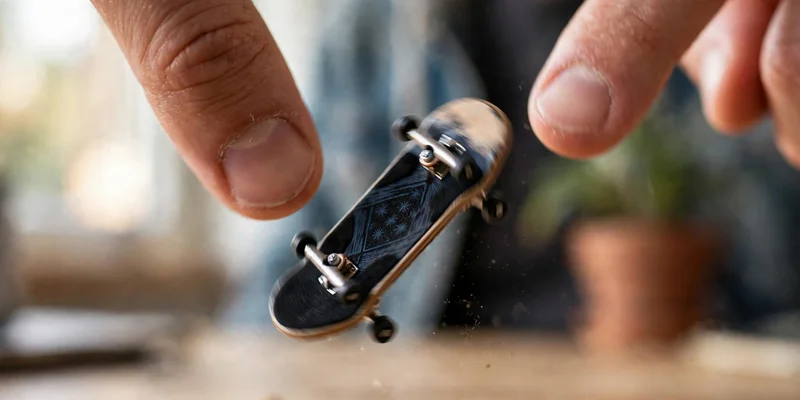
- 360 flip. The hardest flip in the set, and the one every rider wants. It needs a stronger scoop and a bigger flick together, so learn the impossible first.
- Hardflip. The flip that turns the other way. Your impossible taught you to time a scoop and a wrap, and that timing helps with every hard flip.
- Heelflip. The flip that spins the other way. Your impossible taught you to control the board in the air, and that control helps with every flip. Read our guide on How to Heelflip on a Tech Deck when you are ready.
The best next step is to link an impossible with a trick you already know. Roll into a manual, then impossible out of it, or impossible and land straight into a manual. That combo looks smooth, it shows real control, and it is a favourite in fingerboard videos.
For the full list of tricks in order, see our pillar guide to Tech Deck tricks.
What Do Beginners Ask About the Impossible?
Here are the questions beginners ask most about the impossible. Each answer is short and direct, so you can find your fix fast.
How long does it take to learn how to impossible on a Tech Deck?
Most riders who can already varial kickflip land their first impossible within four to six weeks. A clean impossible, with a full wrap and a flat four wheel landing, usually takes two to three months of ten minute daily practice. The wrap is a new motion, so go slow and count your clean landings each day.
Is an impossible harder than a 360 flip?
For most riders, yes. A 360 flip needs a strong scoop and flick, but the board stays in front of your fingers the whole time. An impossible asks the board to wrap around your finger in a vertical circle, which is a stranger motion. Riders who can 360 flip usually need a few extra weeks to learn the wrap.
Why does my board flip instead of wrapping around my finger?
Your back finger is flicking the board like a kickflip instead of scooping it around your finger. The scoop has to drag the tail in a circle, not flick it up. Put your middle finger deeper on the tail, scoop hard toward your heel, and keep your finger in the board’s path so the board rolls around it.
Should I learn it rolling or standing still?
Learn it standing still first. The wrap is easier to see and feel when the board is not moving forward, and you can focus on the scoop alone. Once you can wrap the board five times in a row and catch it, try it with a slow roll. Rolling impossibles are the ones you will actually use in lines.
What is the difference between an impossible and a 360 flip?
A 360 flip flips the board once and spins it 360 degrees flat, so the board stays level in the air. An impossible wraps the board in a vertical circle around your back finger, so the board turns end over end around the finger. The 360 flip is a flip and a spin. The impossible is a wrap.
Why does my board fly away when I try an impossible?
Your scoop is too strong, or your back finger is moving away from the board as it wraps. The board needs your finger to stay in its path, like a pole it turns around. Scoop with less power, keep your hand low and still, and let the board come back to your fingers instead of chasing it.
Do I need to varial kickflip first to learn how to impossible on a Tech Deck?
Yes, you should be able to varial kickflip and pop shuvit first. The impossible is those two tricks plus a wrap, so the scoop has to feel automatic before you add it. If your varial kickflip is shaky, spend a few days on it, then come back here. A solid scoop makes the wrap much easier to learn.
Can I do an impossible on any Tech Deck?
Yes, any standard Tech Deck works. A board with free spinning wheels and decent grip tape is best. If a wheel drags or the grip is smooth, the scoop will be harder and the wrap will slip. Fix the setup first, then practise the trick. A familiar board you already trust works better than a new one.
Conclusion
So, in this article, we covered how to impossible on a tech deck in detail. You learned the finger placement, the scoop and the wrap, the five steps, the three mistakes that stop most riders, and a 10 minute drill that builds the trick day by day. You also saw the advantages and disadvantages, so you know what to expect.
Here is my honest advice. Do not chase a fast wrap in your first week. Spend ten minutes a day on slow, clean tries, and the board will start to roll around your finger on its own. Your fingers are learning a new motion, so give them time and keep the practice slow and steady.
Now go practise for ten minutes and try to wrap the board five times in a row. Once you can do that, your next trick is waiting, and your fingers already know the hardest part.
TechDeckTrick.com is an independent guide and is not affiliated with or endorsed by Tech Deck or Spin Master.