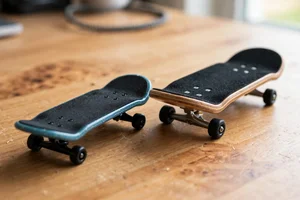
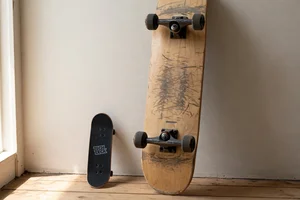
Tech deck vs real skateboard is a question every new rider asks, and the answer depends on your budget, your space and your goals. A Tech Deck is a tiny fingerboard you ride with two fingers on a desk, while a real skateboard is a full size board you ride with your feet. This guide compares size, cost, tricks and safety, so you can pick the right board.
Picture this. A kid sits at a desk and flips a tiny board with two fingers, then lands a clean kickflip. Outside, a skater drops into a concrete bowl on a real board, rolls down the street and pops an ollie over a curb. Both riders are doing the same sport, but their boards could not be more different, and that is where the tech deck vs real skateboard question starts.
A Tech Deck is about 96 mm long and fits in your pocket. A real skateboard is about 80 cm long and carries your whole body. One costs the price of a lunch, the other costs like a new pair of shoes. One you ride at your desk, the other at a skatepark, and the skills are not the same.
In this guide you will see the full comparison, from size and price to tricks, safety and skill transfer, so you can choose the right board for you.
What Is a Tech Deck?
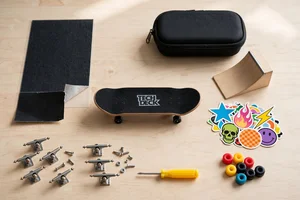
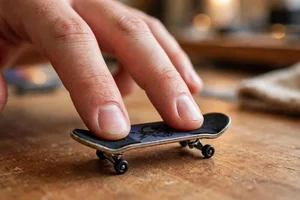
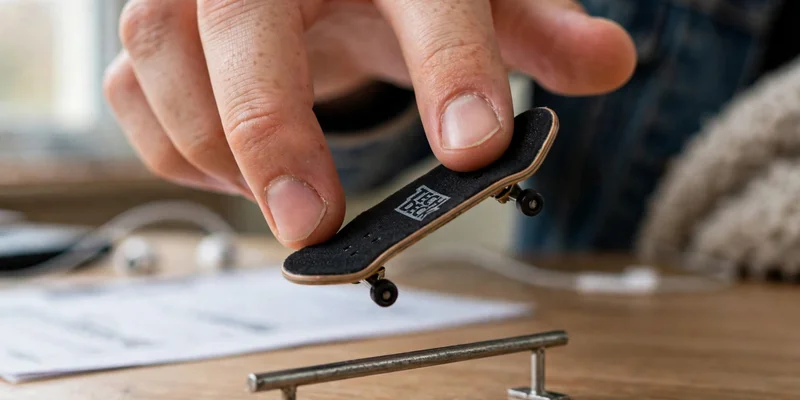
A Tech Deck is a tiny skateboard, about 96 mm long, that you ride with your index and middle finger on a desk or a small ramp. It is a toy sized skateboard, but it is built like the real thing, with a deck, trucks, wheels and grip tape on top.
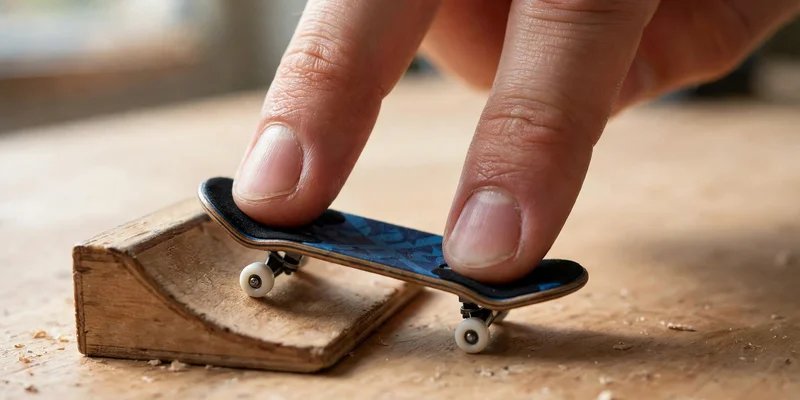
Tech Deck is a brand from Spin Master, and it has been in toy shops since the late 1990s. The boards come in packs with ramps, rails and extra parts, so a beginner can start the same day. The brand made fingerboarding famous, and for most riders it is the first tiny board they ever touch.
The parts are small copies of real skateboard parts. The deck is plastic with a curved nose and tail, the trucks are small metal or plastic pieces that turn, and the wheels are hard plastic. A sheet of grip tape sits on top, so your fingers can grip the board and pop it into the air.
If you want to buy your first one, read our guide on how to choose your first Tech Deck before you spend any money, so you pick the right size and the right pack.
What Is a Real Skateboard?
A real skateboard is a full size board, about 80 cm long and 20 cm wide, that you ride standing up with your feet. It has a wooden deck, metal trucks, urethane wheels and grip tape, and it carries your full body weight at speed.
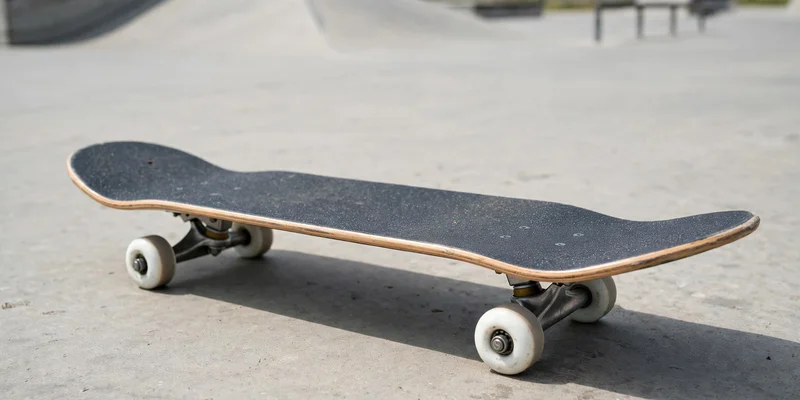
The deck is made from 7 thin layers of maple wood, pressed into a curved shape with a nose, a tail and concave in the middle. That wood gives the board pop, so it springs off the ground when you press the tail down and jump.
The trucks are metal T shaped parts that bolt under the deck and hold the wheels. They turn when you lean, so you can steer without picking the board up. The wheels are urethane, and they roll smooth over concrete and asphalt.
Real skateboards come in sizes from 7.5 inches to 8.5 inches wide. Narrow boards flip faster, wide boards feel steady on ramps, and the right size depends on your shoe size and your style.
How Big Is the Size Difference?
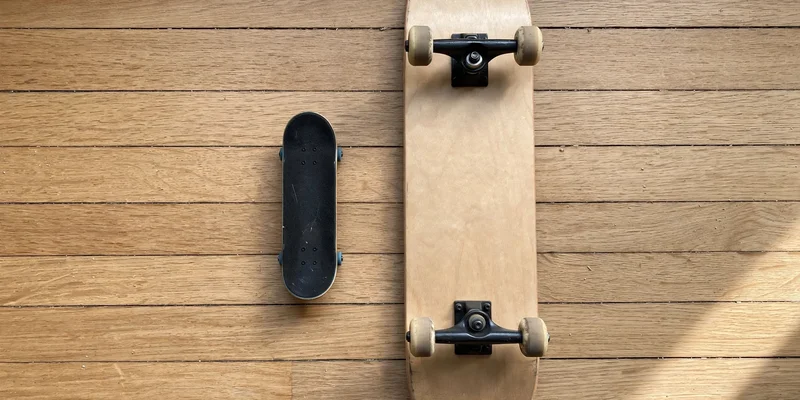
The size gap is the first thing you notice, and it changes everything about how each board feels. A Tech Deck is about 96 mm long, while a real skateboard is about 800 mm long, so the real board is more than 8 times longer.
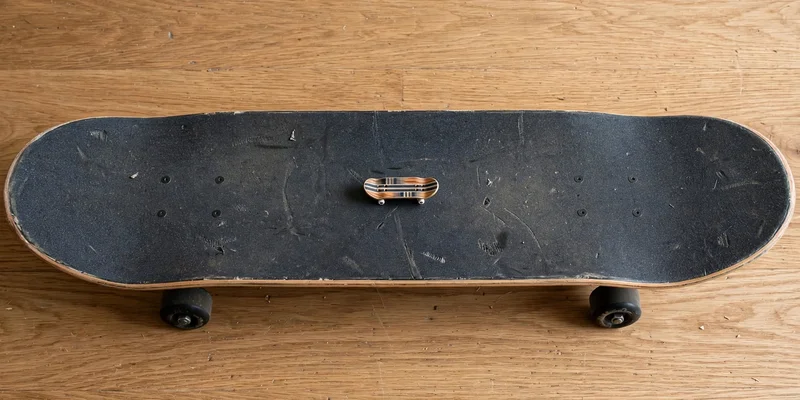
- Length: a Tech Deck is 96 mm long, a real skateboard is about 800 mm long. That gap means one fits in your pocket and the other needs a car or a backpack to carry.
- Weight: a Tech Deck weighs about 30 to 40 grams, a real skateboard weighs about 2 to 3 kilograms. That weight gap is why a real board can carry you, and why a fingerboard can never feel like the real thing.
- Wheels: Tech Deck wheels are about 10 mm across and made from hard plastic, while real wheels are 52 to 54 mm across and made from urethane. Big soft wheels roll over cracks, while small hard wheels stop dead on the same crack.
Size also decides where you can ride. A Tech Deck works on a desk, a book or a tiny ramp. A real skateboard needs a street, a car park or a skatepark with smooth ground and room to roll.
How Much Does Each One Cost?
A Tech Deck is one of the cheapest ways into board sports, while a real skateboard costs a lot more to buy and to keep rolling. The gap is big, and it is the main reason many riders start small.
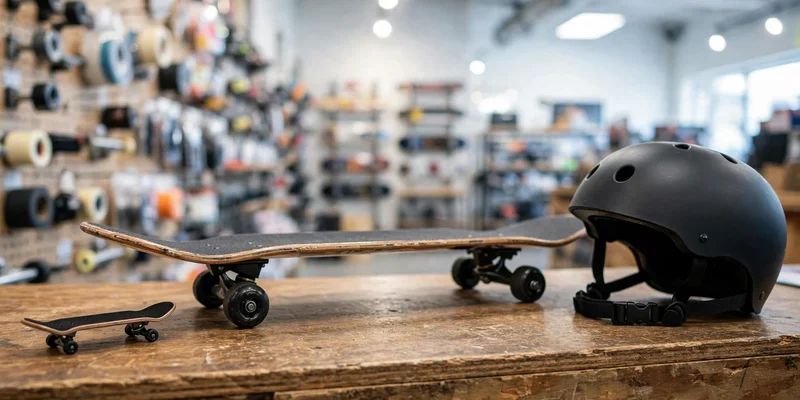
- Tech Deck price: a single board costs 5 to 15 dollars, and a pack with a ramp or two boards costs 10 to 20 dollars. You can start for the price of a lunch, and a broken board costs almost nothing to replace.
- Real skateboard price: a good complete board costs 80 to 150 dollars, with the deck, trucks, wheels and grip tape included. A pro setup with named parts can cost 150 to 250 dollars, and cheap toy boards are a waste of money.
- Running costs: a Tech Deck needs almost nothing after you buy it, just a new board when the grip wears out. A real skateboard needs new shoes, since grip tape eats shoes in a few months, plus new wheels, bearings and decks as parts wear out.
Here is the honest math. A Tech Deck gives you board sports fun for about 10 dollars. A real skateboard gives you a full sport, but you should budget at least 100 dollars to start, and more as parts wear out.
Where Can You Ride a Tech Deck and a Real Skateboard?
A Tech Deck needs only a desk, while a real skateboard needs smooth ground and space. That difference decides when and where you can ride each day.
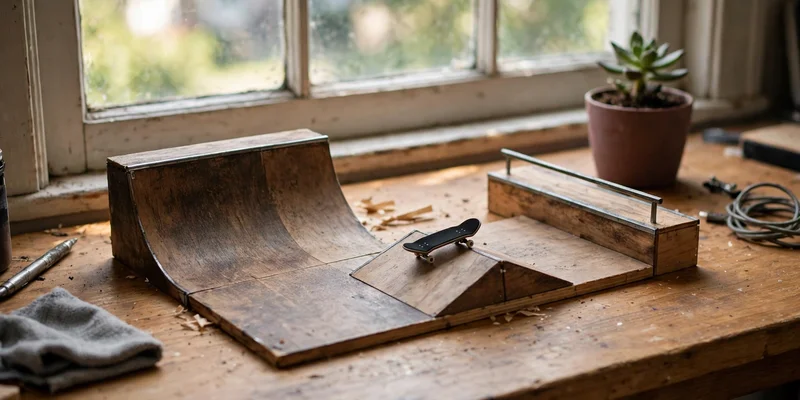
Where to Ride a Tech Deck
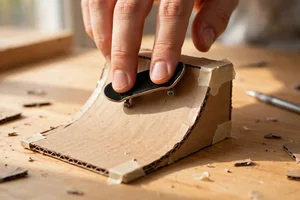
Your desk, your bed, a classroom table or a kitchen counter all work, and a tiny ramp or rail turns any flat surface into a skatepark. You can ride at night, in the rain and in winter, since the weather never stops a fingerboard.
Where to Ride a Real Skateboard
You need a street, a car park, a smooth pavement or a skatepark, and you need room to roll and to fall safely. Rain makes the ground slick and stops a session, and snow or ice ends skating for the whole season in cold places.
The gap in space is the real story. A fingerboard fits a small flat and a busy day, while a real skateboard needs time, good weather and a place to ride. That is why many skaters keep a Tech Deck for days when they cannot get to the park.
Which Tricks Can You Learn on Each?
Both boards share the same trick names, and the list looks the same on paper. The ollie, the kickflip and the grind exist on both, but the way your body learns them is very different.
Tricks on a Tech Deck
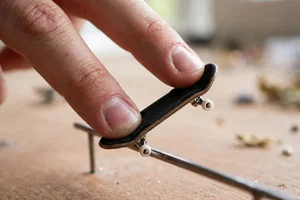
You can learn the ollie on a Tech Deck, the kickflip and the 50-50 grind with two fingers on a desk, and every trick in our pillar guide to Tech Deck tricks works the same way. The timing, the pop and the catch are the same as on a real board, just smaller and safer.
Tricks on a Real Skateboard
The same tricks exist, but your feet do the work, and your whole body has to balance, jump and land. An ollie needs leg strength, a kickflip needs a fast ankle flick, and a grind needs speed and courage on a real rail. Big tricks like stair sets, gaps and bowls have no fingerboard version at all.
Here is the thing. A Tech Deck teaches you the trick in your head, and a real skateboard teaches it in your body. Both kinds of learning help, but only the real board teaches balance and landing on your feet.
Do Fingerboard Skills Transfer to a Real Skateboard?
Yes, some skills transfer, but not as much as you might hope. A Tech Deck teaches you how tricks work, and a real skateboard teaches your body how to do them.

- What transfers: trick names, the order of each trick, and board awareness. You will know what a kickflip is, how it should look, and which foot does what, before you ever stand on a real board.
- What does not transfer: balance, leg strength and fear control. Standing on a moving board, jumping and landing on your feet is a full body skill, and no amount of finger practice builds it.
- What helps most: commitment. Fingerboarders already know that a trick needs ten tries, not one, so they keep trying after a fall. That patience is the one skill that truly moves from fingers to feet.
My honest take is this. Fingerboarding will not make you land a real kickflip on day one, but it will make you learn it faster, because you already understand the trick. Think of it as studying the trick before you try it for real.
Which One Is Safer?
A Tech Deck is far safer than a real skateboard, and the gap is not close. The worst fingerboard injury is a sore finger, while a real skateboard can break a wrist.

- Tech Deck risks: sore fingers from long sessions, and a board that flies off the desk. There is no speed, no height and no fall, so the risk stays tiny for every age.
- Real skateboard risks: falls, sprained ankles, broken wrists and head injuries. Even good skaters fall, and a bad fall on concrete can mean a hospital visit and weeks off the board.
- How to stay safe: wear a helmet every time you ride a real skateboard, and add knee and elbow pads while you learn. Learn to fall the right way, by rolling and keeping your wrists loose, before you try your first big trick.
For kids under 10, a Tech Deck is the safe pick. For older kids and teens who want a real board, a helmet is not optional, and a parent should watch the first sessions at a skatepark.
Who Should Pick a Tech Deck?
Pick a Tech Deck if you want board sports fun with almost no cost, no risk and no need for space. It fits a desk, a pocket and a rainy day.

- Kids under 10: a Tech Deck is the right size, the right price and the right risk level for young riders. It teaches the trick names and the timing without any danger.
- People with no skatepark nearby: if the nearest park is an hour away, a Tech Deck brings the sport to your desk. You can ride every day, even when the weather is bad.
- Skaters in winter: when snow or rain stops real skating for months, a Tech Deck keeps your trick knowledge fresh. Many real skaters use one on rest days to plan new tricks.
- Collectors and fans: Tech Deck packs come in many designs and pro models, so some riders collect them for fun. The boards are cheap, small and easy to display on a shelf.
A Tech Deck is also a good gift. It costs little, it needs no size choice, and it works the moment it comes out of the box.
Who Should Pick a Real Skateboard?
Pick a real skateboard if you want real speed, real air and a real sport. It needs space, time and courage, but the feeling of rolling is something a fingerboard can never give.

- Teens and adults who want exercise: skating builds leg strength, balance and stamina, and a one hour session burns real energy. It is a sport, not just a toy, and your body will feel it.
- People near a skatepark: if a park is close to home, a real board makes sense, since you can ride with friends and learn from better skaters. The community is half the fun of the sport.
- Riders who want the full thrill: speed down a hill, air over a stair set and the sound of wheels on concrete are things a fingerboard cannot copy. If that thrill is what you want, only a real board gives it.
- People ready to fall: real skating means falling, and you need to accept that before you start. If you can laugh off a bruise and try again, you have the right mind for a real board.
A real skateboard is a bigger promise than a Tech Deck. It asks for your time, your money and your courage, but it pays you back with a sport you can ride for life.
Advantages and Disadvantages of a Tech Deck vs a Real Skateboard
Here is the honest list for both boards, side by side, so you can weigh them in one place.
Advantages of a Tech Deck
- It costs almost nothing. A Tech Deck is 5 to 15 dollars, so you can start fingerboarding for the price of a lunch, and a broken board is cheap to replace. That low price means anyone can try the sport without thinking twice about money.
- You can ride it anywhere. A desk, a table or a bed all work, and rain, snow or night never stop a session, so you can practise every single day. That freedom is why fingerboarding fits busy lives and small homes.
- It is safe for every age. There is no speed, no height and no fall, so kids, parents and older riders can all enjoy it without fear. That safety makes it the best first board for a young rider.
Disadvantages of a Tech Deck
- It is not real exercise. Your fingers move, but your body stays still, so a Tech Deck will never build fitness, balance or stamina. If you want a sport that keeps you fit, a fingerboard is not the answer.
- It can feel like a toy. The tiny scale is fun, but it will never give you the speed, the wind and the thrill of rolling on a real board. That limit is why many riders move to a real board once they want more.
- The skills only partly transfer. You learn how tricks work, but you do not learn balance, foot strength or how to fall, so real skating still starts from zero. Finger practice helps your head, not your feet.
Advantages of a Real Skateboard
- It is a full sport. Skating builds strength, balance and stamina, and it gets you outside in fresh air with friends, not stuck at a desk. That mix of fitness and fun is what keeps riders skating for years.
- The thrill is real. Speed, air and the sound of wheels on concrete are feelings a fingerboard cannot copy, and landing a trick on your feet is a rush. That rush is why skaters keep coming back to the park.
- The community is big. Skateparks, shops and online groups are full of riders who share tips, film clips and help beginners learn faster. That community turns a solo sport into a shared one.
Disadvantages of a Real Skateboard
- It costs a lot more. A good complete board is 80 to 150 dollars, and shoes, helmets and parts add up fast as you ride more. That cost puts real skating out of reach for some riders.
- You can get hurt. Falls, sprains and broken wrists are part of the sport, and a bad fall can keep you off the board for weeks. That risk is the price of the thrill, and every skater pays it sooner or later.
- It needs space and good weather. Rain, snow and a lack of smooth ground can stop a session, and many riders have no park near home. That limit is why a Tech Deck stays in the pocket of many real skaters.
Choose a Tech Deck if you are young, short on money or short on space, or if you just want to learn how tricks work. Choose a real skateboard if you want a real sport, real exercise and real speed, and you are ready to fall and get up again. Many riders choose both, and that is the smartest answer of all.
What Do People Ask About Tech Deck vs Real Skateboard?
Here are the questions readers ask most about tech deck vs real skateboard. Each answer is short and direct, so you can find your answer fast.
Is a Tech Deck a real skateboard?
No, a Tech Deck is not a real skateboard. It is a fingerboard, a tiny model you ride with two fingers on a desk. A real skateboard is about 80 cm long and you ride it standing up with your feet. Both share trick names and parts, but only the real board carries your body at speed.
In tech deck vs real skateboard, which one should a beginner choose?
A beginner should start with a Tech Deck if the goal is to learn trick names and timing with no risk and almost no cost. It fits on a desk and you can practise every day. If the beginner wants real riding, speed and exercise, a real skateboard is the better pick, with a helmet and pads from day one.
Can fingerboarding help you learn real skateboarding?
Yes, fingerboarding helps you learn how tricks work, and that knowledge transfers to a real board. You learn the pop, the flick and the catch in the right order, and you learn the names of every trick. It does not teach balance, foot strength or how to fall, so your first real ollie will still feel new and hard.
How much does a real skateboard cost for a beginner?
A good beginner complete skateboard costs 80 to 150 dollars in most shops, with the deck, trucks, wheels and grip tape included. Cheaper toy boards exist, but they turn badly and break fast. Add 20 to 40 dollars for a helmet, and budget for shoes, since grip tape wears shoes out in a few months of regular riding.
Is a Tech Deck safe for kids?
Yes, a Tech Deck is safe for kids, and it is one of the safest ways to enjoy board sports. The board is tiny and light, so it cannot hurt a child, and there is no speed or height involved. The only care needed is to keep small parts away from young children, who might put them in their mouths.
Can you ride a Tech Deck outside?
Yes, you can ride a Tech Deck outside on any smooth flat surface, like a table, a bench or a smooth pavement slab. Most riders keep it indoors, because wind can move the tiny board and rough ground stops the small wheels. A real skateboard is made for outside, with big soft wheels that roll over cracks and rough ground.
In tech deck vs real skateboard, which one is more fun?
Fun depends on what you enjoy. A Tech Deck is fun anywhere, with no risk and no need to leave the house. A real skateboard is fun in a bigger way, with speed, wind and the thrill of landing a trick. Many riders enjoy both, and use the Tech Deck on rainy days when they cannot skate outside.
Do you need a helmet for a Tech Deck?
No, you do not need a helmet for a Tech Deck, because you ride it with your fingers on a desk and there is no fall risk. A real skateboard is different, and a helmet is a must for every rider, beginner or pro. Pads for knees and elbows are smart too, since most falls land on hands and knees.
Conclusion
So, in this article, we covered tech deck vs real skateboard in detail. You saw how the two boards differ in size, price, riding spots, tricks, safety and skill transfer, and you saw who each board suits best. A Tech Deck is cheap, safe and always in your pocket, while a real skateboard is fast, physical and a full sport in its own right.
My honest advice is simple. If you are young, short on space or short on money, start with a Tech Deck and learn the trick names and the timing. If you have a skatepark nearby and you want real speed and real air, get a real skateboard, wear a helmet, and learn to fall the right way first.
Now tell us in the comments which board you ride, and why you picked it.
TechDeckTrick.com is an independent guide and is not affiliated with or endorsed by Tech Deck or Spin Master.