Learning how to choose your first tech deck is easier when you know what to check before you pay. This guide compares board sizes, basic and pro series boards, prices, and the parts that matter most, like wheels, trucks, and grip tape. You will also learn where to buy, which accessories help, and the mistakes that waste money for new riders.
You walk into a toy shop or open a shopping app, and you see rows of small boards in bright boxes. Some cost a few dollars, some cost a lot more, and they all look almost the same at first glance. Learning how to choose your first tech deck saves you from buying a board that feels wrong in your hands or breaks after a week. The truth is, a good first board does not need to be the most costly one. It needs the right size for your fingers, smooth wheels, solid trucks, and grip tape that holds your fingers in place. In this guide you will learn what comes in the box, how sizes work, what the price should be, and where to buy with trust. By the end, you will know exactly which board to pick and which trick to try first.
Follow these steps to pick the right board for your fingers, your budget and your first tricks.
What Is a Tech Deck and What Comes in the Box?
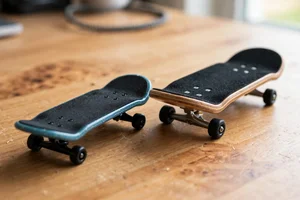
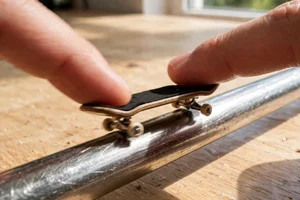
A Tech Deck is a small fingerboard, about 96 mm long, that you ride with two fingers on a desk or table. A standard box holds one complete board, and many sets also include a small tool and a few spare parts.
Which Tech Deck Size Is Right for You?
Most beginners should start with a standard 96 mm board, because it fits two fingers well and feels stable on a desk.
What Is the Difference Between a Basic Tech Deck and a Pro Series Board?
A basic Tech Deck costs less and uses plastic parts, while a Pro Series board uses a real wood deck, better trucks, and smoother wheels.
How Much Should You Pay for Your First Tech Deck?
Expect to pay 5 to 10 dollars for a basic Tech Deck and 15 to 25 dollars for a Pro Series board in 2026.
What Should You Look for When You Buy a Tech Deck?
Check the wheels first. They should spin freely, the trucks should feel solid with no wobble, and the grip tape should feel rough, not smooth.
Where Is the Best Place to Buy Your First Tech Deck?
A toy shop or sports shop is best for a first buy, because you can hold the board and check the parts before you pay.
What Accessories Do You Need With Your First Tech Deck?
You need nothing extra to start, but a small tool, spare wheels, and a clear desk space help a lot.
What Are the Most Common First Tech Deck Mistakes?
The most common mistake is buying the cheapest board with stiff wheels and smooth grip tape.
What Should You Learn First After You Buy a Tech Deck?
Learn the ollie first, because it teaches finger control, pop, and landing, and it opens the door to almost every other trick.
What Is a Tech Deck and What Comes in the Box?
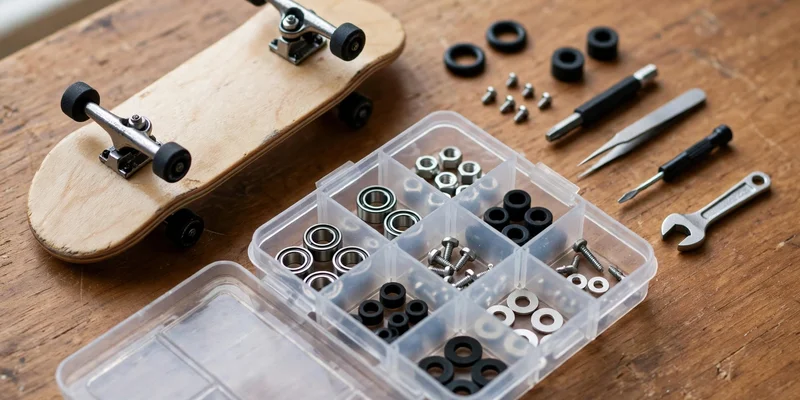
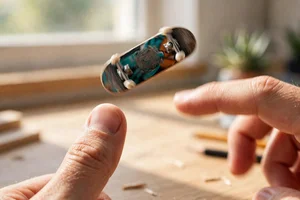
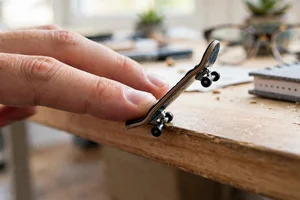
A Tech Deck is a small fingerboard, about 96 mm long, that you ride with two fingers on a desk or table. A standard box holds one complete board, and many sets also include a small tool and a few spare parts. Think of it as a tiny skateboard made for your fingers. Your index finger sits near the front bolts and your middle finger sits on the tail, and those two fingers do the work your feet would do on a real board. The board itself is small enough to fit in your pocket, so you can practise anywhere you have a flat surface. Most first time buyers are surprised by how complete the box is. You do not need to buy extra parts on day one, and the board is ready to ride as soon as you open it. Here is what you will usually find inside.
- The board. A shaped deck with grip tape on top and a graphic on the bottom. The deck is the main part you feel under your fingers, so its size and shape matter most. Most standard decks measure 96 mm long and about 32 mm wide, which suits most adult and teen hands.
- Trucks and wheels. Two metal trucks hold four small wheels, and these parts decide how smooth your board rolls. Good wheels spin freely for several seconds when you flick them with a finger. If a wheel stops fast or wobbles, the board will feel slow and hard to control.
- Grip tape. A rough sheet on top of the deck that stops your fingers from sliding off. Fresh grip feels like fine sandpaper under your fingertips, and it is one of the first things to check. Smooth or peeling grip makes even simple tricks feel slippery and hard to land.
- A small tool and spare parts. Many sets include a tiny wrench for the truck nuts and sometimes spare wheels or screws. The tool lets you tighten loose trucks and swap a worn wheel in a minute. Keep it in the box, because you will need it again when the board loosens with use.
Which Tech Deck Size Is Right for You?
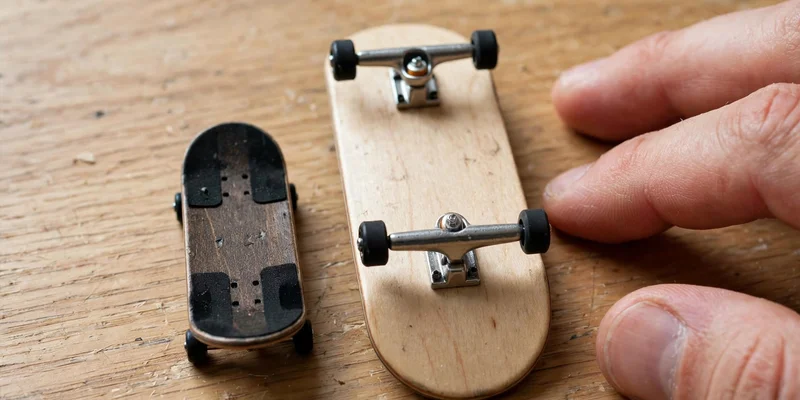
Most beginners should start with a standard 96 mm board, because it fits two fingers well and feels stable on a desk. Smaller 85 mm boards suit small hands, and wider 100 mm boards suit riders who want more room under their fingers. Size sounds like a small detail, but it changes how the board feels from the first minute. A board that is too narrow feels tippy, and a board that is too wide feels slow to flip. The right size lets your fingers sit flat on the grip tape without hanging over the edges. Here is a simple way to pick. Place your index and middle fingers side by side on the board. If both fingertips fit on the deck with a little space to spare, the size is right for you.
- 85 mm, mini size. A short board that suits younger riders and small hands. It turns fast and feels light, but it can feel cramped if your fingers are wide. Pick this size if you are under 12 or your fingers feel crowded on a standard board.
- 96 mm, standard size. The most common size, and the best pick for most beginners. It balances stability and control, and most tricks are taught on this size. Pick this size if you are unsure, because it works for almost every hand and every first trick.
- 100 mm and wider, large size. A wider deck that gives your fingers more room and a steadier landing. It feels calm and stable, but flips take a little more effort. Pick this size if you have large hands or you want a board that feels solid under your fingers.
If you can, hold a board before you buy it. A quick finger test in a shop tells you more than any size chart, and it takes less than ten seconds.
What Is the Difference Between a Basic Tech Deck and a Pro Series Board?
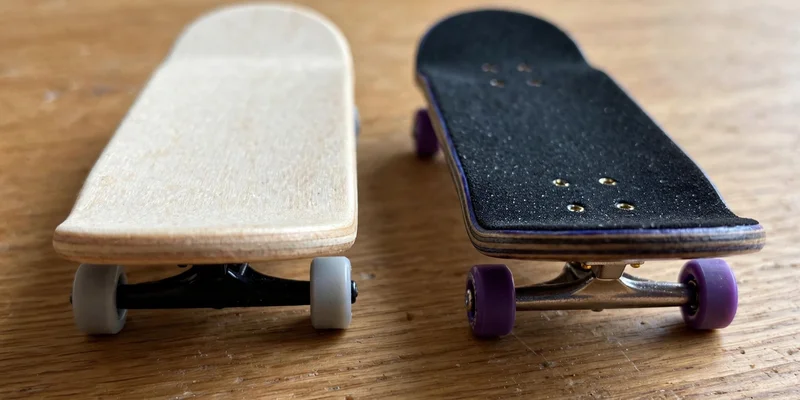
A basic Tech Deck costs less and uses plastic parts, while a Pro Series board uses a real wood deck, better trucks, and smoother wheels. Beginners can start with either one, but a Pro board feels better in the hand and lasts longer. The price gap is real, so it helps to know what you get for the extra money. A basic board is fine for learning your first moves, and many riders start there. A Pro Series board is built for riders who practise every day and want parts that respond well. Here is the honest split. A basic board teaches you the moves. A Pro board makes the moves feel smoother, and it holds up better when you drop it on a hard desk again and again.
- Deck material. Basic boards use a plastic deck, while Pro Series boards use real maple wood in thin layers, like a real skateboard. Wood gives a nicer pop and a more natural feel under your fingers. You will feel the difference most when you pop the tail for an ollie.
- Trucks and wheels. Basic boards use simple plastic trucks and hard wheels, while Pro boards use metal trucks and softer, smoother wheels that roll longer. Metal trucks also stay tight for longer, so the board keeps its shape. Smooth wheels matter most, because they decide how far the board rolls after each trick.
- Grip tape and detail. Pro boards carry finer grip tape and cleaner graphics, and the parts fit together with less wobble. Basic boards can feel a little loose out of the box, though a quick tighten with the tool often fixes it. If the board wobbles when you shake it gently, the trucks need a small tighten.
- Price and value. A basic board costs about 5 to 10 dollars, and a Pro board costs about 15 to 25 dollars. For a first board, a basic one is fine, but if you know you will practise daily, the Pro board is better value over six months. Read our guide to the best Tech Deck to buy in 2026 before you pick one, because it compares the top picks side by side.
How Much Should You Pay for Your First Tech Deck?
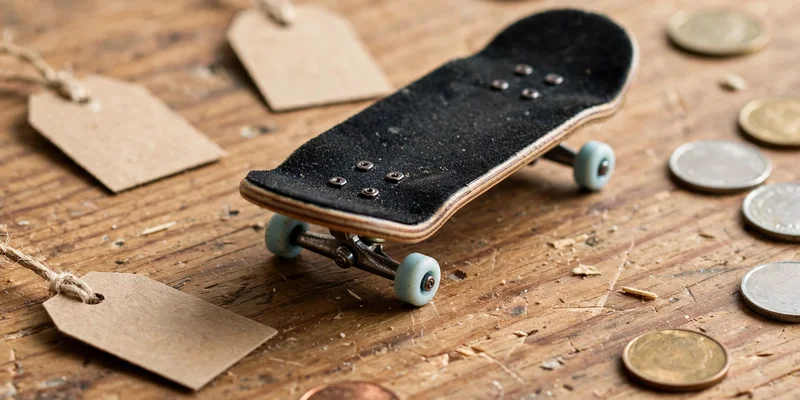
Expect to pay 5 to 10 dollars for a basic Tech Deck and 15 to 25 dollars for a Pro Series board in 2026. Paying more than 30 dollars for a first board is rarely worth it, because you are still learning what you like. Prices change a little from shop to shop, but the range above holds in most toy shops and trusted online shops. A price far below this range is a warning sign, and a price far above it usually means you are paying for a rare graphic, not a better board. The smart move is to set a budget before you shop. Pick a number, stick to it, and spend the money on the board itself, not on a fancy box or a rare colour.
- Under 5 dollars. Very cheap boards are often fakes or old stock with stiff wheels and smooth grip. They look like a bargain, but they make learning harder and break fast. Skip these, even if the graphic looks cool, because a bad board teaches bad habits.
- 5 to 10 dollars, basic range. This is the right price for a real basic Tech Deck. You get a complete board that rolls well and lasts through your first weeks of practice. This range is the best pick if you are not sure fingerboarding is for you yet.
- 15 to 25 dollars, Pro Series range. This is the right price for a real Pro Series board with a wood deck and metal trucks. It feels better and lasts longer, so it suits riders who practise every day. This range is the best pick if you already know you enjoy fingerboarding.
- Over 30 dollars. Prices above this level usually mean a collector board, a rare graphic, or a full set with ramps and extras. None of that helps you learn faster, so save the money for your second board. A rare graphic looks nice on a shelf, but it rides just like a normal board.
Watch out for shipping costs online. A 7 dollar board with 8 dollars of shipping is not a 7 dollar board, so check the full price before you pay.
What Should You Look for When You Buy a Tech Deck?
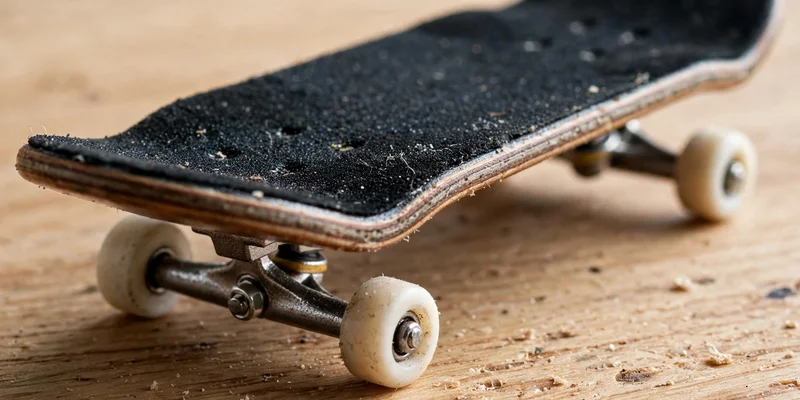
Check the wheels first. They should spin freely, the trucks should feel solid with no wobble, and the grip tape should feel rough, not smooth. If those three parts are good, the board will ride well. This check takes less than a minute, and it saves you from a board that feels dead on the desk. Do it in the shop if you can, or check it the moment the parcel arrives so you can return a bad one in time. Think of it like buying shoes. You would not buy shoes without checking the fit, and you should not buy a fingerboard without checking the parts your fingers will touch every day.
- Wheels that spin freely. Flick each wheel with a finger and watch it spin. A good wheel spins for two to three seconds without stopping or wobbling, and all four wheels should feel the same. If one wheel stops fast, the board will pull to one side when it rolls.
- Trucks that feel solid. Hold the board and shake it gently. The trucks should not rattle, and the wheels should not wobble from side to side. A small tighten with the tool fixes a loose truck in seconds. If the truck still wobbles after a tighten, the board may have a weak part inside.
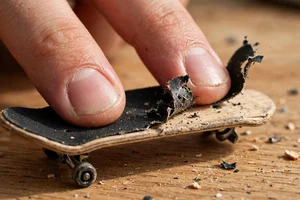
- Grip tape with real grip. Run a fingertip across the top of the deck. It should feel rough, like fine sandpaper, and your finger should not slide across it easily. Smooth grip is the most common fault on cheap boards. If the grip feels smooth, the board will be hard to control on your first ollie.
- A straight deck with no bend. Look along the board from the side. The deck should be flat with a small kick at the nose and tail, and it should not bend or twist. A bent deck never rides straight, so do not buy it. A straight deck also lands flatter, which makes your first tricks easier to catch.
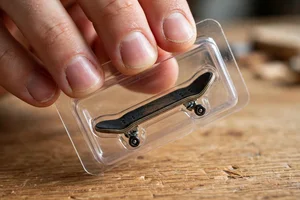
- A sealed box from a known seller. Buy from a shop you trust, and check that the box is sealed and the parts list matches what is inside. A sealed box is your best sign that the board is real and complete. If the box is open or the parts look mixed, ask for a different one.
Where Is the Best Place to Buy Your First Tech Deck?
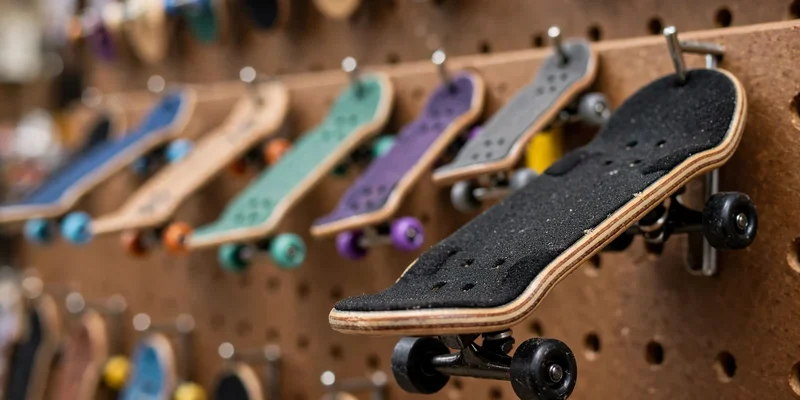
A toy shop or sports shop is best for a first buy, because you can hold the board and check the parts before you pay. Trusted online shops work well too, as long as the seller has strong reviews and a clear return policy. Where you buy matters almost as much as what you buy. A good seller gives you a real board, a sealed box, and a way to return it if something is wrong. A bad seller gives you a fake board and no help after the sale. If you are buying your very first board, go to a shop in person if you can. You will learn more in two minutes of holding boards than in an hour of reading listings online.
- Toy shops and sports shops. These are the safest place for a first buy. You can hold the board, spin the wheels, and check the grip tape before you pay, and staff can help you pick a size. Shops like these also take returns, so a bad board is easy to swap.
- Trusted online shops. Large online shops with strong seller reviews are a good second choice, and they often have more colours and sizes in stock. Check the seller rating, read the last ten reviews, and check the return policy before you order. If the reviews mention fake boards or missing parts, pick a different seller.
- Second hand boards. A used board can be a good deal if it comes from a rider you trust, but check the wheels and grip tape first. Worn grip and loose trucks are common on used boards, and new parts can cost as much as a new board. A used Pro board in good shape can be a smart buy, but a worn basic board is rarely worth it.
- Market stalls and unknown sellers. Very cheap boards at market stalls are often fakes with stiff wheels and weak trucks. They look like the real thing, but they ride badly and break fast. If the price is half the normal price and the seller cannot show a sealed box, walk away.
Buy from one seller you trust, keep the receipt, and test the board on the day it arrives. That way a problem is easy to fix while the return window is still open.
What Accessories Do You Need With Your First Tech Deck?
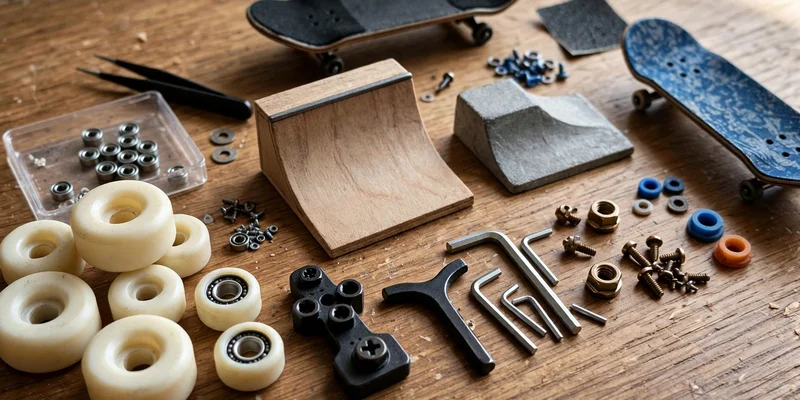
You need nothing extra to start, but a small tool, spare wheels, and a clear desk space help a lot. A mini ramp can wait until you can ollie and land clean tricks on flat ground. Many new riders spend too much on accessories before they can ride. The board itself is the main tool, and your fingers do the rest. A few small extras make practice easier, but none of them replace time on the board. Start simple. Get the board, find a flat desk, and practise for two weeks. Then buy the extras that fix a real problem you have felt, not a problem you imagined.
- A small tool. Most sets include one, and it tightens trucks and swaps wheels in a minute. If your set has no tool, buy one, because loose trucks are the most common small fault. A loose truck makes the board wobble, and a quick tighten fixes it in seconds.
- Spare wheels and screws. Wheels wear down with daily use, and a spare set costs only a few dollars. Keep them in the box so a worn wheel never ends a practice session early. Change a wheel when it stops spinning freely or feels flat on one side.
- A flat, clear desk space. A smooth desk or table about 60 cm wide is all you need. Clear the space, wipe it clean, and keep small items away from the board while you practise. A clean desk also protects the board, because dust and crumbs wear the wheels faster.
- A mini ramp or rail, later. A small ramp adds fun once you can ollie, and a rail teaches grinds. Wait until you land ten clean ollies in a row before you buy one, so the ramp matches your skill. When you are ready, see our guide to building a fingerboard park for ideas that suit a small desk.
- A case or pouch. A small pouch keeps the board safe in a bag and stops the grip tape from wearing against other items. It is a small buy, but it keeps a good board in good shape for months. A board carried loose in a pocket picks up dust and loses grip faster.
What Are the Most Common First Tech Deck Mistakes?
The most common mistake is buying the cheapest board with stiff wheels and smooth grip tape. The next mistakes are picking the wrong size and skipping a quick check of the trucks before the first ride. These mistakes are easy to avoid once you know them, and they cost nothing to fix. Most of them come from rushing the buy, so slow down for two minutes and check the board first. Here is the thing. A good first board does not need to be costly, but it does need to roll well. A board that rolls badly makes every trick harder, and many new riders quit because they blame their fingers instead of the board.
- Buying the cheapest board you can find. A very cheap board often has stiff wheels, weak trucks, and smooth grip. It looks like a bargain, but it makes learning slow and frustrating, and it breaks fast. Spend 5 to 10 dollars on a real basic board instead, and your first month will feel much better.
- Picking the wrong size. A board that is too small feels cramped, and a board that is too wide feels slow to flip. Many riders buy a size they saw in a video without testing it with their own fingers. Test the size with your own fingers first, and pick the one that feels natural in your hand.
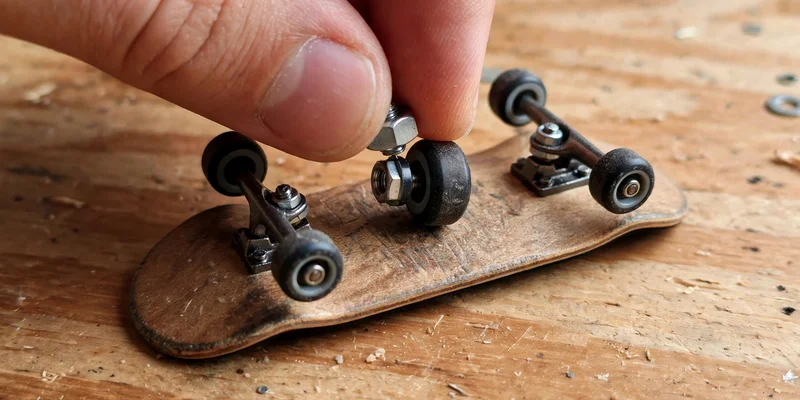
- Skipping the parts check. Many riders open the box and start riding without spinning the wheels or checking the trucks. A loose truck or a stuck wheel then ruins the first session, and the rider thinks the trick is too hard. Spend one minute on the parts check, and you will know the board is ready before you start.
- Practising on a soft surface. Carpet, beds, and cloth stop the board from rolling and popping cleanly. Tricks feel impossible on a soft surface, even with a good board and good fingers. Practise on a hard desk or table, and save the soft surfaces for storage.
- Trying hard tricks on day one. Many new riders try a kickflip on the first day and quit when it fails. Hard tricks need finger control that only comes from weeks of simple practice. Start with rolling, turning, and the ollie, and the harder tricks will follow in time.
What Should You Learn First After You Buy a Tech Deck?
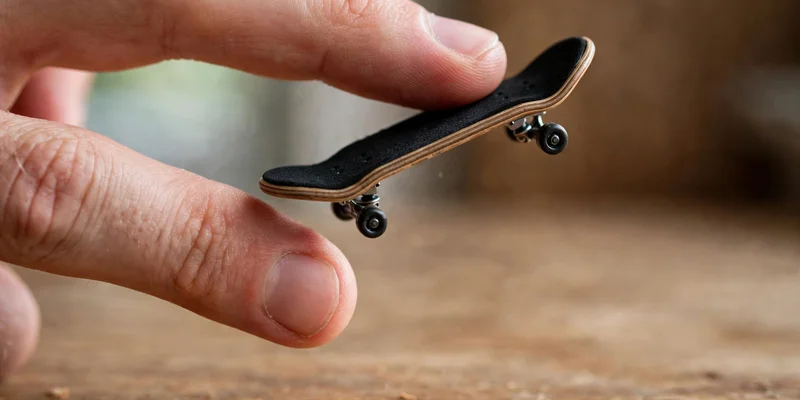
Learn the ollie first, because it teaches finger control, pop, and landing, and it opens the door to almost every other trick. Spend 10 minutes a day on it for two weeks, and it will start to feel natural. The ollie is the base trick for fingerboarding. Once you can ollie, you can jump over small items, land on ramps, and start flips and spins. Without it, most other tricks stay out of reach. Do not rush it. A clean ollie takes most riders two to three weeks of short daily practice, and that time builds the finger strength and timing that every later trick needs.
- Roll and turn first. Spend your first two days just rolling the board forward, turning it left and right, and stopping it cleanly. This builds finger control, and it teaches you how the board responds to small moves. If you cannot roll in a straight line, the ollie will feel much harder.
- Learn the ollie next. Pop the tail with your middle finger, slide your index finger forward, and land on all four wheels. Our guide on how to ollie on a Tech Deck shows the finger placement and the five steps in full. Practise it in short sessions, and count your clean landings out of ten each day.
- Learn the manual after the ollie. A manual teaches balance, because you ride on two wheels and hold the board steady. Read our guide on how to manual on a Tech Deck once your ollie lands most of the time. A clean manual also makes your ollie landings softer, because your fingers learn to catch the board gently.
- Try a shuvit when the ollie feels solid. A shuvit adds a small spin, and it is the easiest spin trick to learn. It shows the scoop and the catch step by step, and it builds straight on your ollie. Land five clean shuvits in a row before you try a bigger spin.
- Follow a trick order. Learning tricks in order saves weeks of frustration, because each trick builds on the last one. See our full list in the Tech Deck tricks guide and pick your next trick from there. A clear order also keeps practice fun, because you always know what to try next.
What Do Beginners Ask About Choosing a First Tech Deck?
Here are the questions readers ask most about choosing a first Tech Deck. Each answer is short and direct, so you can find what you need fast.
What size Tech Deck is best for beginners?
A 96 mm board is best for most beginners, because it fits two fingers well and feels stable on a desk. It balances control and comfort, and most tricks are taught on this size. Smaller hands may suit an 85 mm board, while larger hands may prefer a 100 mm board for more room.
How much does a first Tech Deck cost?
A real basic Tech Deck costs 5 to 10 dollars, and a Pro Series board costs 15 to 25 dollars in 2026. Paying more than 30 dollars for a first board is rarely worth it. Check the full price online, because shipping can add several dollars to a cheap board and change the real cost.
Is a Pro Series Tech Deck worth it for a beginner?
Yes, if you plan to practise every day, because a Pro board uses a real wood deck, metal trucks, and smoother wheels that last longer. If you are still unsure about fingerboarding, start with a basic board for 5 to 10 dollars and upgrade later once you know you enjoy it.
What is the difference between a Tech Deck and a fingerboard?
A Tech Deck is a brand of fingerboard, while fingerboard is the general name for all small boards you ride with your fingers. Other brands make fingerboards too, often with wood decks and custom parts. Tech Deck is the most common brand in toy shops, so most beginners start with one.
Where can I buy a real Tech Deck online?
Buy from a large online shop with a strong seller rating and a clear return policy, and read the last ten reviews before you order. Check that the box is sealed when it arrives, and test the wheels and grip tape on day one. If the price is far below normal, the board may be fake.
How do I know if my Tech Deck is real or fake?
A real Tech Deck comes in a sealed box with clean printing, a straight deck, and wheels that spin freely for two to three seconds. Fake boards often have rough printing, stiff wheels, smooth grip tape, and loose trucks. If several of these faults appear together, return the board and buy from a trusted seller.
Do I need accessories with my first Tech Deck?
No, you do not need accessories to start, because the board is ready to ride as soon as you open the box. A small tool and spare wheels help, and a clear desk space matters more than any extra part. Wait until you can ollie well before you buy a ramp or a rail for practice.
What trick should I learn first on a Tech Deck?
Learn the ollie first, because it teaches finger control, pop, and landing, and it opens the door to almost every other trick. Spend 10 minutes a day on it for two to three weeks, and it will start to feel natural. After the ollie, learn the manual, then try a shuvit for your first spin.
How long does a Tech Deck last?
A basic Tech Deck lasts three to six months with daily practice, while a Pro Series board often lasts six to twelve months with the same use. Wheels wear first, then grip tape loses its grip. Replace worn wheels, tighten loose trucks, and keep the board clean, and it will last much longer.
Conclusion
So, in this article, we covered how to choose your first tech deck in detail. You learned what comes in the box, which size fits your fingers, how basic and Pro Series boards differ, what a fair price looks like, and where to buy with trust. You also saw which accessories help and which mistakes to avoid.
Here is my honest advice. Start with a standard 96 mm board in the 5 to 10 dollar range, check the wheels and grip tape on day one, and spend two weeks learning the ollie on a clear desk. If you practise daily and still enjoy it after a month, upgrade to a Pro Series board and feel the difference for yourself.
Now pick your board, find a flat desk, and try your first ollie today. Come back and tell us which board you chose and how your first week of practice went.
TechDeckTrick.com is an independent guide and is not affiliated with or endorsed by Tech Deck or Spin Master.