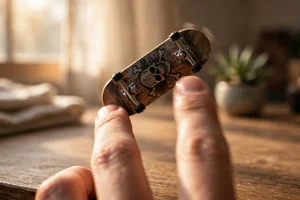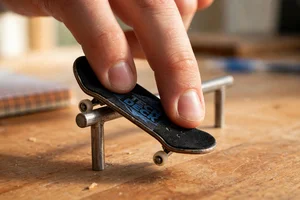
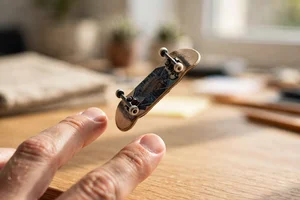
A laser flip is a heelflip and a 360 shuvit done at the same time, so the board flips heel-side and spins a full 360 degrees while it is in the air. This guide explains the finger placement, the timing and the six steps you need to land it on a Tech Deck. You will also learn the common mistakes and a daily drill to build the trick fast.
You watch a laser flip and it looks like two tricks at once. The board flips heel-side and spins a full 360 degrees in the air, then lands back on its wheels like nothing happened. If you want to learn how to laser flip on a tech deck, this guide will take you there one step at a time.
A laser flip mixes two tricks you already know. It is a heelflip plus a 360 shuvit in one move. Your front finger flicks the board heel-side, your back finger scoops it into a spin, and both moves happen together in one pop.
The trick sounds hard, and it is one of the hardest flip tricks to learn. But it is not a mystery. With a solid heelflip and a clean 360 shuvit, most riders land their first laser flip in two to three weeks. This guide shows you the finger placement, the six steps and the mistakes to avoid.
What Is a Laser Flip on a Tech Deck?
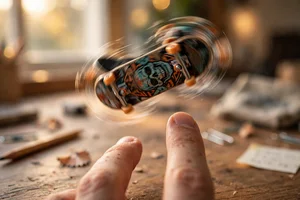
A laser flip is a heelflip and a 360 shuvit done at the same time. The board flips heel-side and spins a full 360 degrees in the air, then lands on its wheels facing the same way it started. Your fingers do both moves in one pop, so the board never stops moving.
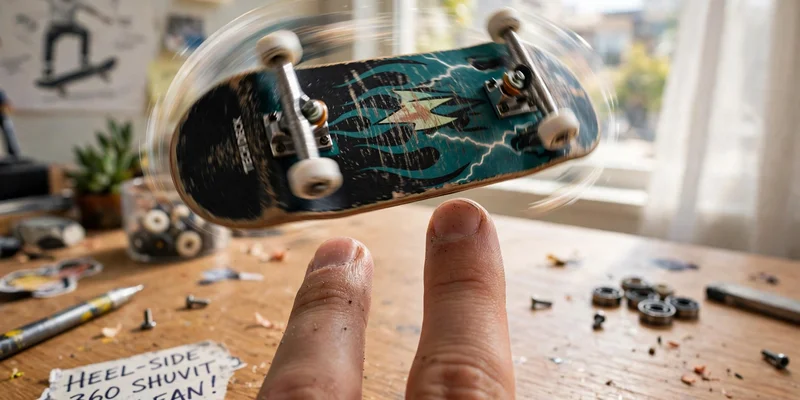
The name comes from real skateboarding, where the trick got its name because the board moves so fast it looks like a blur. In a heelflip the board spins toward the heel side, the opposite way from a kickflip. In a 360 shuvit the board spins flat like a helicopter blade.
- The flip part: the board spins once heel-side, toe side to heel side. Your front finger flicks the heel side edge of the board, and the spin is the same flick you use in a heelflip. One full flip is the goal, no more and no less.
- The spin part: the board turns a full 360 degrees flat, like a shuvit. Your back finger scoops the tail, and the board spins around its middle while it flips. The flip and the spin finish at the same moment, and that timing is what makes the trick work.
- The landing part: the board lands on all four wheels facing the same way it started. Both fingers catch the board as it comes down, and a soft catch keeps it from bouncing off your desk. A clean landing is the sign of a real laser flip.
How Is a Laser Flip Different From a Heelflip and a 360 Shuvit?
A laser flip is a heelflip and a 360 shuvit mixed into one trick. A heelflip only flips the board, and a 360 shuvit only spins it, but a laser flip does both at once. That mix is why it looks so good and why it takes more practice than either trick alone.
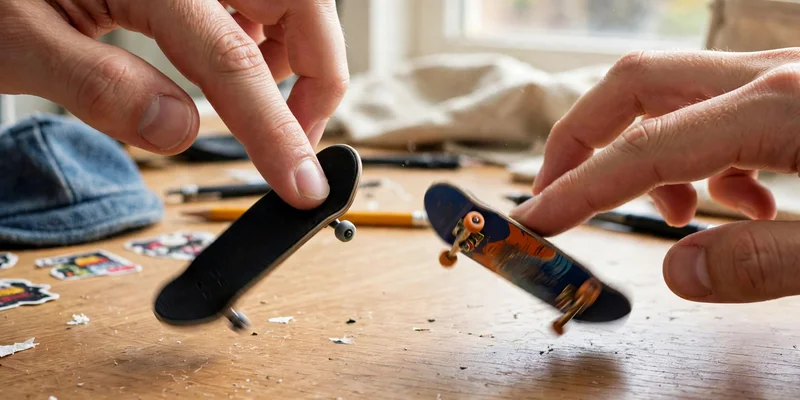
- Heelflip: the board flips once heel-side and lands facing the same way. Your fingers stay in one place, and only the flick matters. Our guide on how to heelflip on a Tech Deck shows the full flick step by step.
- 360 shuvit: the board spins a full 360 degrees flat and lands facing the same way, with no flip. Your back finger scoops the tail, and the board stays flat the whole time. Our guide on how to 360 shuvit on a Tech Deck covers the scoop in detail.
- Laser flip: the board flips once heel-side and spins 360 degrees at the same time. Your front finger flicks while your back finger scoops, so two moves happen in one pop. The trick needs both skills, and that is why most riders learn the heelflip and the 360 shuvit first.
What Do You Need Before You Learn a Laser Flip?
You need a solid heelflip and a clean 360 shuvit before you try a laser flip. The trick mixes both moves, so a weak heelflip or a shaky shuvit will show up at once. A flat desk and a board that rolls smooth are the other two things you need.
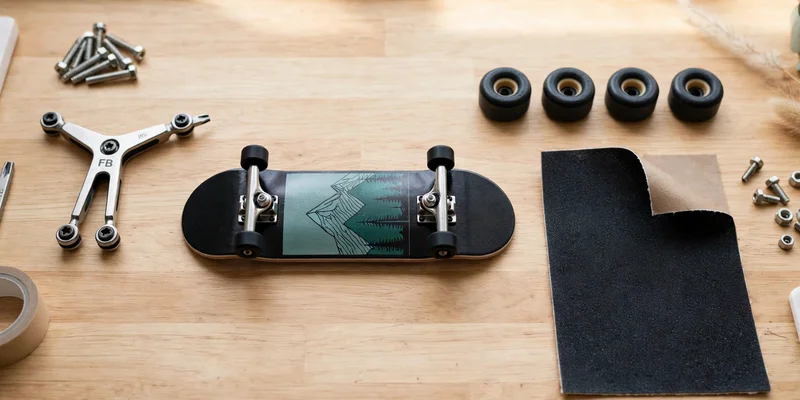
- A heelflip you can land 8 times out of 10. Count your landings for a few days. If your heelflip still flips twice or lands on its side, practise it more first. A steady heelflip is the base of the laser flip.
- A 360 shuvit you can land clean. The scoop has to feel easy, because your back finger will scoop while your front finger flicks. If the shuvit still feels wild, the laser flip will feel worse.
- A flat desk with room to roll away. You need at least 40 cm of clear space in front of you, because the board spins a full turn and needs room to land. A wall behind you stops runaway boards.
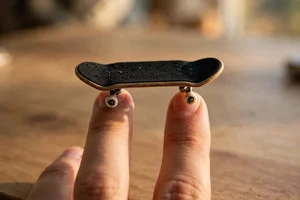
- A board with fresh grip and tight trucks. Loose trucks wobble in the air, and worn grip lets your front finger slip during the flick. Check both before you start, and change the grip when it feels smooth.
Where Should You Place Your Fingers for a Laser Flip?
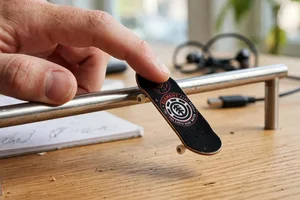
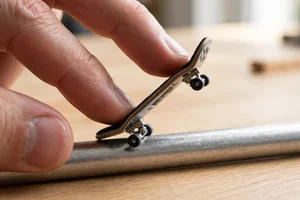
Your index finger sits near the front bolts on the heel side edge and your middle finger sits on the tail, just like a heelflip. The difference is in the scoop. Your back finger scoops the tail while your front finger flicks, so the flip and the spin begin together.
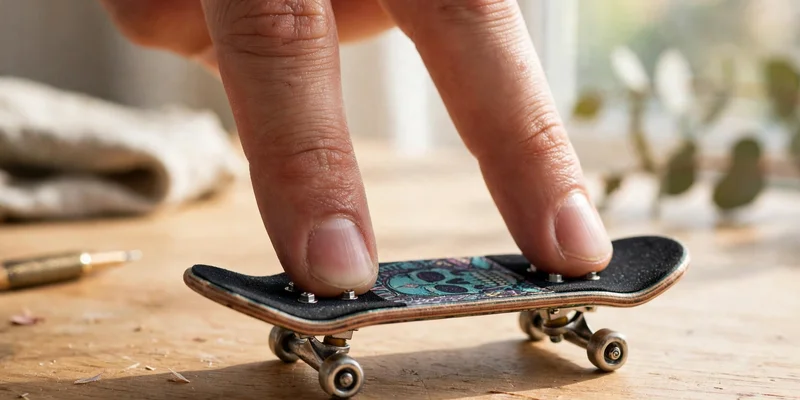
Put your index finger on the deck just behind the front bolts, a little closer to the heel side edge than in a normal heelflip. That spot gives your finger a clean flick off the side. Put your middle finger on the tail, over the back bolts, because that finger pops the board and starts the spin.
The flick and the scoop must start together. Your front finger flicks the heel side edge while your back finger scoops the tail in a small circle. If you flick first and scoop late, the board flips but does not spin.
Practise the placement on a flat desk first. Hold the board in the start position, flick your front finger off the edge, and scoop your back finger in a circle. Feel how the two moves start together. Once your fingers know the shape, the real trick gets much easier.
How to Laser Flip on a Tech Deck: Step by Step
Here is a simple 6 step process to learn a laser flip on a Tech Deck. Follow the steps in order, and practise each one before you move to the next.
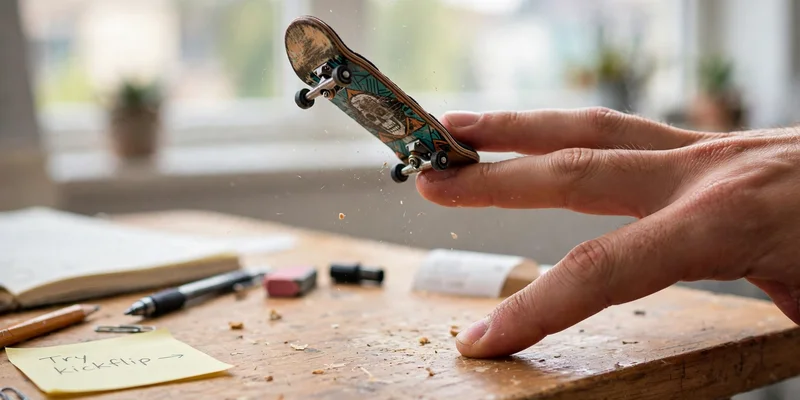
Step 1: Roll Slow and Set Your Fingers
Roll toward the middle of your desk at a slow, steady speed, with your fingers in the laser flip position. Slow speed gives you control, and control matters more than speed when you are learning. Keep your hand relaxed, because stiff fingers flick too hard.
Step 2: Pop the Board With Your Back Finger
Press your middle finger down on the tail to pop the board into the air, the same clean ollie from our guide on how to ollie on a Tech Deck. Pop straight down, not back, so the board rises level. A level pop gives your front finger a clean board to flick, and a crooked pop sends the board off line.
Step 3: Flick Your Front Finger Off the Heel Side Edge
As the board rises, slide your index finger off the heel side edge of the board. Flick sideways and slightly up, the same flick you use in a heelflip. The flick starts the board flipping heel-side, and one clean flick gives one full flip.
Step 4: Scoop Your Back Finger in a Small Circle
While the board flips, scoop your middle finger in a small circle under the tail. Your back finger drives the 360 spin, and the spin finishes at the same time as the flip. Keep your eyes on the board, because your hand follows where you look.
Tip: practise steps 3 and 4 without landing first. Pop, flick, scoop, and let the board fall on the desk. That drill teaches your fingers the timing better than ten failed landings.
Step 5: Catch the Board With Both Fingers
Watch the board as it finishes the flip and the spin, then catch it with both fingers on the grip tape. Catch it soft, with your fingers bent a little, so the board does not bounce. A soft catch is the difference between a landed trick and a board on the floor.
Step 6: Land on All Four Wheels and Roll Away
Let the board drop onto all four wheels and roll away clean. Keep your fingers on the board for a second after landing, then roll forward. A clean roll away is the sign of a real laser flip, so celebrate it.
What Are the Common Mistakes in a Laser Flip?
Most failed laser flips come from the same few mistakes, and each one has a simple fix. Check this list before your next session, because one small change can fix a trick that feels stuck.
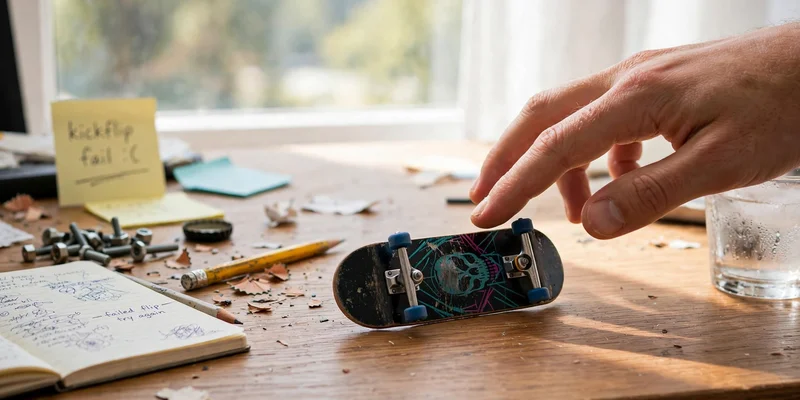
- Flicking too hard. A hard flick spins the board twice, so it lands upside down. Fix it by flicking soft and short, with just the tip of your finger. One gentle flick gives one full flip.
- Scooping too late. If your back finger scoops after the flip ends, the board flips but does not spin. Fix it by starting the scoop at the same moment as the flick. The two moves must start together, not one after the other.
- Popping at an angle. A crooked pop sends the board sideways, and no flick can save it. Fix it by popping straight down on the tail and keeping your back finger over the bolts.
- Catching with one finger. A one finger catch tips the board and drops it on its side. Fix it by watching the board come down and catching it with both fingers at once. A soft two finger catch lands the trick.
- Riding with worn grip tape. Smooth grip lets your fingers slip during the flick and the scoop. Change the grip when it feels worn, and see our guide on how to replace Tech Deck grip tape for the full method.
How Do You Practice a Laser Flip?
A short daily drill beats one long weekend session, because your fingers learn the timing through repetition. Ten minutes a day is enough to see real progress in a week.
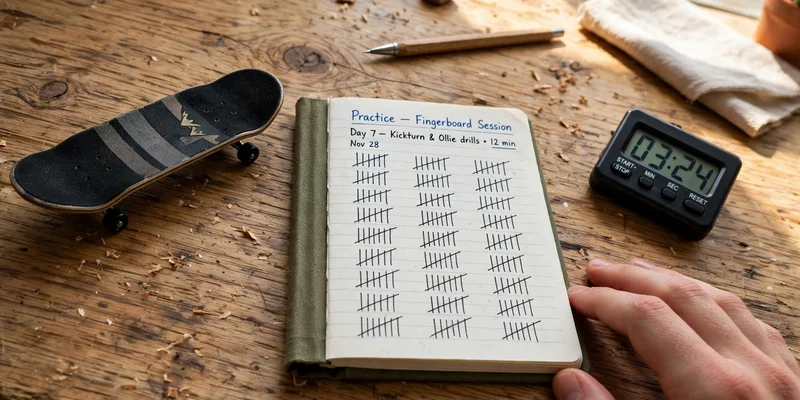
Start with 2 minutes of finger placement on a flat desk. Hold the start position, flick your front finger off the heel side edge, and scoop your back finger in a circle. Feel how the flick and the scoop start together.
Then spend 3 minutes on pop, flick and scoop with no landing. Let the board fall on the desk and watch how it spins. This drill teaches the timing without the pressure of a landing.
Then spend 3 minutes on full attempts, catching the board and rolling away. Count your clean landings each day, because the number climbs faster than you think.
Finish with 2 minutes of heelflips and 360 shuvits to keep both base tricks sharp. A laser flip is only as good as the two tricks inside it, so keep them fresh.
Rest your fingers when they feel tired. Tired fingers make sloppy flicks, and sloppy flicks teach bad habits. Five focused minutes beat fifteen tired minutes, so stop early and come back fresh tomorrow.
What Are the Advantages and Disadvantages of a Laser Flip?
The laser flip looks amazing and teaches you real board control, but it is one of the hardest flip tricks to learn. Here is the honest list before you commit your practice time to it.
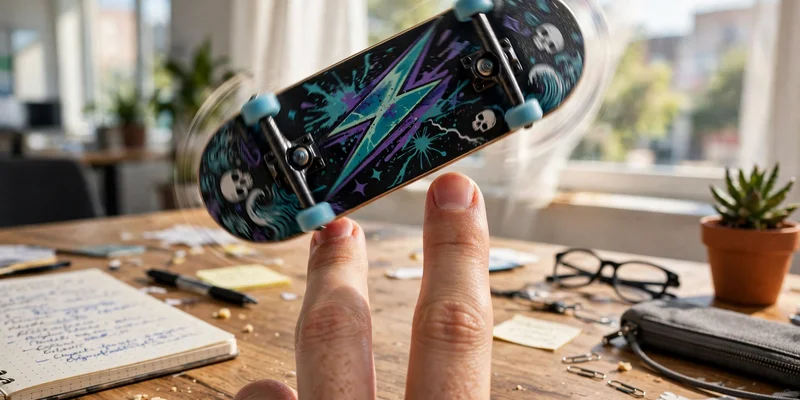
Advantages
- It looks impressive. A laser flip has a flip and a full spin in one move, so it stands out in photos and videos. Other riders notice it fast, and it is one of the best looking flip tricks you can learn on a Tech Deck.
- It teaches real timing. The trick forces your fingers to flick and scoop at the same moment. That timing carries over to every other flip trick you learn later, from the 360 flip to the hardflip.
- It opens the door to harder tricks. Once the laser flip feels steady, the 360 flip and the hardflip get easier, because your fingers already know how to flip and spin together.
Disadvantages
- It is hard to learn. Most riders need two to three weeks of daily practice before the trick feels steady. The timing fights you at first, and early sessions can feel frustrating.
- The board spins wrong often. One wrong flick gives a double flip or a half spin, so you will chase runaway boards across your desk a lot. A clear desk with a wall behind it helps while you learn.
- It needs two strong base tricks. You cannot learn a laser flip without a solid heelflip and a clean 360 shuvit. If either base trick is weak, the laser flip will stay out of reach until you fix it.
What Should You Learn After a Laser Flip?
Once your laser flip feels steady, you have the timing and control for harder flip tricks. Pick one of these next, and your flip game will grow fast.
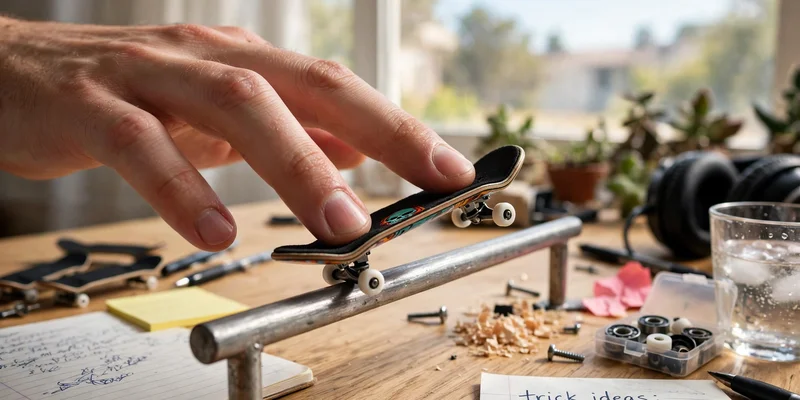
Try a 360 flip next, because it adds a second spin to the flip you already know, and your fingers will pick it up fast. A hardflip is another good next step, because it mixes a flip with a different turn.
When you want a full list of what to learn next, see our pillar guide to Tech Deck tricks. It lists every trick from beginner to pro, so you can pick your next goal with confidence.
What Do People Ask About How to Laser Flip on a Tech Deck?
Here are the questions readers ask most about how to laser flip on a tech deck. Each answer is short and direct, so you can find your answer fast.
What is a laser flip on a Tech Deck?
A laser flip is a heelflip and a 360 shuvit done at the same time on a Tech Deck. The board flips once heel-side and spins a full 360 degrees in the air. Your front finger flicks the board into a flip while your back finger scoops it into a spin, and both moves finish together.
Is a laser flip harder than a heelflip?
Yes, a laser flip is harder than a heelflip. A heelflip only flips the board, so your fingers stay in one place and only the flick matters. A laser flip adds a full 360 degree spin at the same time, so your back finger must scoop while your front finger flicks. Learn the heelflip first, then add the spin.
How long does it take to learn how to laser flip on a tech deck?
Most riders need two to three weeks of daily practice to land a steady laser flip. Ten minutes a day is enough, and short sessions work better than long ones. Your first clean landing may come in a few days, but a smooth flip with a clean roll away takes longer. Track your landings each day.
Which finger flicks the board in a laser flip?
Your index finger flicks the board in a laser flip. It sits on the deck just behind the front bolts, close to the heel side edge. Your index finger slides off the edge to start the flip. Your middle finger scoops the tail and starts the 360 spin, but the flick comes from the index finger.
Why does my board spin the wrong way in a laser flip?
Your board spins the wrong way when your back finger scoops the wrong way or your flick is too strong. A late scoop gives a half spin, and a hard flick flips the board twice. Scoop in a small circle at the same moment as the flick, and keep the flick soft. Practise the scoop alone until it feels smooth.
Can I learn a laser flip without a 360 shuvit?
You can try, but it will feel much harder. The laser flip uses the same scoop and timing as a 360 shuvit, so riders who know the shuvit learn the spin far faster. Learn the 360 shuvit first until you can land it ten times in a row. Then the laser flip becomes a small step, not a big jump.
What is the best surface to learn a laser flip?
A smooth, clear desk is the best surface to learn a laser flip. The board rolls clean, and a dropped board lands on wood. Avoid rough tables, because they slow the board and make the spin wild. Clear a space at least 40 cm long, keep the desk dry, and put a wall behind you to stop runaway boards.
What should I learn after learning how to laser flip on a tech deck?
After a laser flip, try a 360 flip. It adds a second spin to the flip you already know, and your fingers will pick it up fast. A hardflip is another good next step, because it mixes a flip with a different turn. See our full list of Tech Deck tricks to pick your next goal.
Conclusion
So, in this article, we covered how to laser flip on a tech deck in detail. You learned what the trick is, how it differs from a heelflip and a 360 shuvit, where your fingers go, and the six steps to land it. You also saw the common mistakes, the 10 minute drill, and the honest pros and cons.
My honest advice is simple. Do not rush the steps. Spend a few days on the flick and the scoop timing before you chase a clean landing, because the timing you build now stays with you for every flip trick after this one.
Now clear a space on your desk, set your fingers, and try the first three steps today. Then come back and tell us in the comments how many tries your first laser flip took.
TechDeckTrick.com is an independent guide and is not affiliated with or endorsed by Tech Deck or Spin Master.